Outdoor lighting products need more than an attractive shape. Their housings must handle long-term exposure, support stable assembly, and allow manufacturers to produce consistent forms at scale. In modern aluminum outdoor lighting fixtures, ADC12 alloy is often considered because it suits die-casting and supports detailed housing designs.
Material selection also matters when planning LED outdoor lighting for retail ranges, building projects, and regional distribution. Buyers should look beyond the word “aluminum” and consider alloy type, casting quality, surface treatment, sealing, and internal component design together.
Why ADC12 Is Used in Die-Cast Housings
ADC12 is an aluminum-silicon-copper die-casting alloy. It has good castability, machinability, and mechanical properties. Silicon improves casting behavior, while copper contributes to strength. These characteristics make ADC12 useful when manufacturers need repeatable forms and controlled structural details.
Outdoor lamps contain mounting points, cable paths, screw positions, and internal spaces for drivers or lamp holders. Die casting can form many of these details directly into the housing and reduce extra machining.
Material alone does not determine quality. Mold design, casting parameters, wall thickness, finishing, assembly, and waterproof structure still influence the final fixture. Buyers should therefore evaluate the complete process rather than judging a product only by its alloy name.
Material Choice and Modern Fixture Design
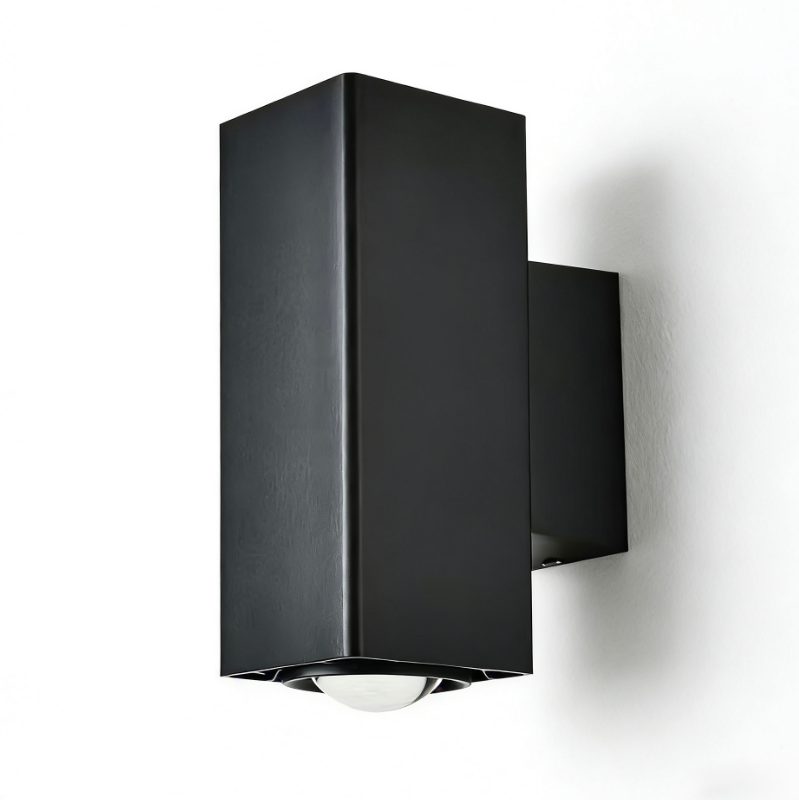
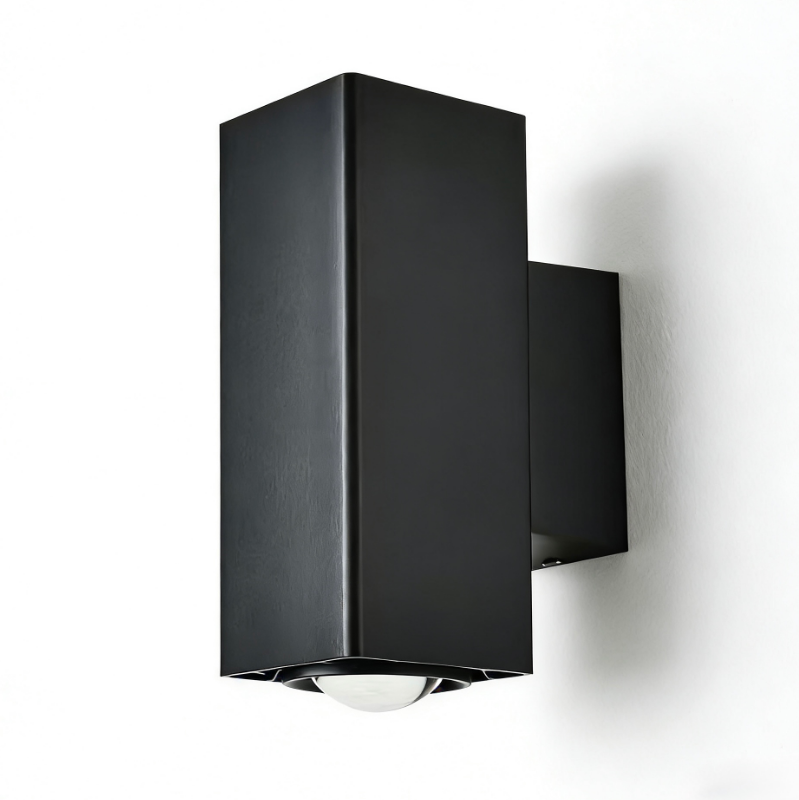
Modern outdoor lighting often uses clean lines, compact proportions, and simple geometric forms. These products may look minimal, but the internal structure still needs room for an LED module, driver, wiring, sealing parts, or a replaceable lamp holder.
ADC12 supports detailed die-cast shapes, giving designers more freedom to combine structural features with a clean exterior. This is useful for aluminum outdoor lighting fixtures, where appearance and internal layout need to work together.
Surface preparation is equally important. Before painting, the lamp body should be processed carefully so the surface is smooth and ready for coating. Fine grinding can improve surface texture and coating durability.
Heat, Components, and Maintenance Planning
The metal housing also forms part of the thermal structure. In integrated LED products, housing geometry, contact surfaces, and component layout all affect heat transfer.
For B2B buyers, this is why an LED outdoor lighting product should be reviewed as a complete system. Stable chips and drivers, suitable internal spacing, and serviceable structures can make maintenance easier over the product’s working life.
Replaceable components can also reduce unnecessary fixture replacement. In our product development, LED chips and drivers can be replaced when required. Some models can also switch between integrated LED solutions and lamp-holder configurations such as E27, giving distributors and project buyers more flexibility for different markets.
Outdoor Protection Requires More Than Aluminum
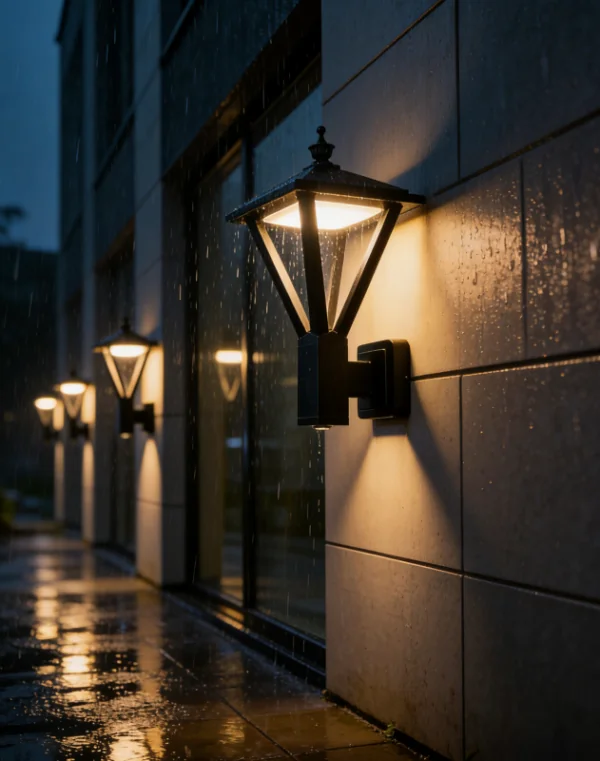
An aluminum body provides a stable structural base, but outdoor performance depends on more than the housing material. Rain, humidity, dust, temperature changes, and installation conditions all place demands on the complete fixture.
Sealing design, shade material, joints, cable entries, surface coating, and assembly quality need to work together. Our products commonly combine aluminum bodies with PC or acrylic shades, while waterproof structures are optimized for long-term outdoor use.
Buyers should not treat ADC12 as a complete answer to outdoor durability. The alloy helps create a stable die-cast housing, while coating quality and waterproof construction remain important. For project procurement, these elements should be checked together.
Production Flexibility for B2B Buyers
Material and structure become more important when a product moves from sample selection to repeat orders. We focus on modern small outdoor lamps and integrate design, production, and customization.
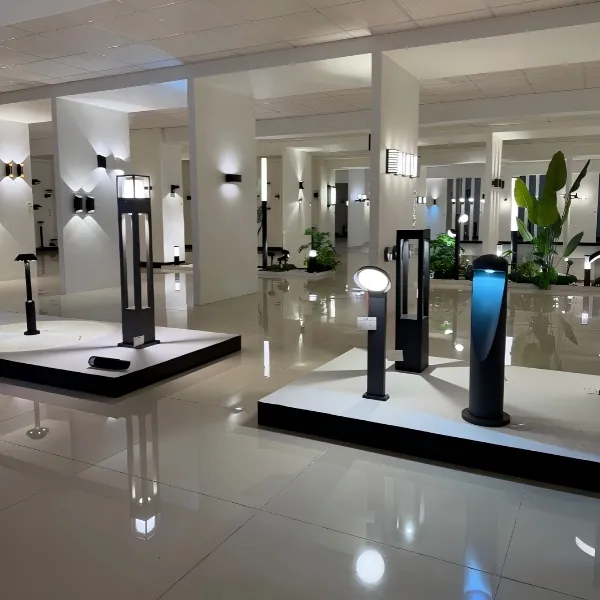
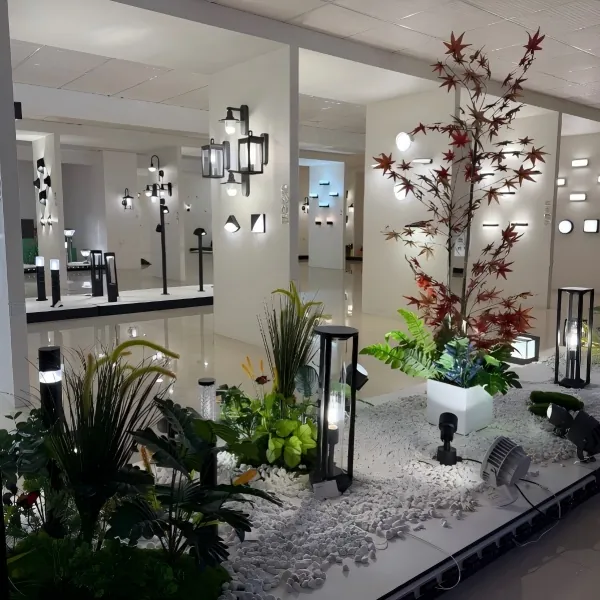
At Keyida, our 7,000 m² production workshop and 1,100 m² showroom support product development and batch supply. We release new designs each quarter, and many products use private molds. OEM and ODM services are available for customers who need different colors, functions, or configurations.
Functional options can include CCT adjustment, RGB lighting, radar sensing, and PIR sensing. Black and gray are common project colors, while customized colors are also available. We provide 2D drawings, high-resolution images, and instructions to support distributors, lighting stores, and project teams.
What Buyers Should Check Before Ordering
When evaluating a supplier, buyers can ask practical questions. What alloy is used for the housing? How is the surface treated before painting? Can LED components be replaced? Can the same design support a lamp-holder version? How is waterproofing handled around joints and cable entries?
Order conditions also matter. Our regular models start from an MOQ of 200 pieces per model, while customized colors start from 800 pieces per model. Products carry a three-year warranty, and practical service life can reach about five to six years under suitable use conditions.
These details connect material choice with real purchasing decisions. Housing quality matters more when supported by stable components, practical maintenance, and repeatable production.
A Practical View of ADC12
ADC12 plays an important role because it gives manufacturers a practical route to detailed and repeatable die-cast housings. Its value is stronger when material selection is combined with suitable mold design, surface finishing, waterproof structure, and serviceable electrical components.
For B2B buyers, the alloy should be treated as one part of the complete product system rather than a single quality indicator. At Keyida, we combine modern outdoor product development with private-mold options and OEM or ODM support, helping partners adapt product structures and functions to different market needs.