Choosing between 12V low-voltage and 120V line-voltage outdoor lighting is not only a question of fixture type. The supply voltage affects current, cable losses, transformer requirements, installation planning, and maintenance. For B2B buyers, these factors can influence both operating efficiency and outdoor project design.
When an exterior lighting company evaluates a project, efficiency should be considered at system level rather than judged by voltage alone. A 12V setup can work efficiently in compact landscapes, while a 120V layout may reduce voltage-drop concerns on longer runs. Cable length, controls, and power conversion also affect the result.
How Voltage Changes Power Distribution
For the same electrical power, a lower-voltage circuit carries more current. This matters because higher current can increase resistive losses in the cable. In a 12V installation, cable size, run length, and connected load therefore deserve careful attention during planning.
Voltage drop can also affect light output at fixtures located farther from the transformer. Designers may use suitable cable sizes, divide loads across several runs, or place transformers closer to the luminaires. These steps can reduce unnecessary losses and keep fixture performance more consistent.
A 120V circuit carries lower current for the same power level. This can make long cable runs easier to manage from an efficiency perspective. However, electrical installation rules, protection methods, and local code requirements still need to be considered before a project adopts line voltage outdoors.
Where Transformer Losses Matter
A 12V system normally needs a transformer or compatible power supply to step line voltage down. That conversion stage introduces its own losses. Transformer quality, loading, and system design can influence how much input power reaches the connected fixtures.
Oversizing or poorly matching a transformer can also reduce practical efficiency. B2B project planners should calculate the connected lighting load and allow suitable capacity without treating a larger transformer as automatically better. Distribution planning is especially important when many fixtures share one supply point.
At Keyida, we focus on modern small outdoor luminaires for commercial and project buyers. Our product development includes LED solutions as well as replaceable lamp options such as E27 configurations. This allows buyers to select a structure according to project requirements.
Efficiency Depends on More Than Voltage
The efficiency of a garden lighting system also depends on the luminaire itself. LED chip performance, driver stability, optical design, and control settings affect how effectively electrical input becomes useful light. Comparing only 12V and 120V can therefore hide other important sources of energy loss.
Controls can change operating efficiency as well. CCT adjustment, sensors, and suitable switching strategies allow lighting to respond more closely to actual use. For example, radar or PIR functions can support projects where lights do not need to remain at the same operating state throughout the night.
Our outdoor lighting products use aluminum bodies with PC or acrylic shades, depending on the design. Surface preparation includes fine grinding before painting. We also support CCT, RGB, radar sensing, PIR integration, and customized colors for suitable projects. These features help B2B buyers configure products around application needs rather than voltage alone.
Which Voltage Fits Different Project Scales?
For compact gardens, courtyards, villa landscapes, and short fixture runs, 12V lighting can be practical. The lower operating voltage is commonly chosen where the system layout is concentrated and the transformer can be positioned near the connected fixtures.
Larger commercial landscapes may involve longer distances between power points and luminaires. In such cases, 120V distribution can reduce current for the same wattage and limit conductor losses. Project teams still need to assess installation practices, protection requirements, fixture compatibility, and local regulations.
Buyers working with an exterior lighting company should therefore provide site plans, cable distances, fixture quantities, and expected operating hours before finalizing the electrical layout. These details make system comparisons more realistic than using voltage as the only purchasing criterion.
Practical Selection for B2B Buyers
Retailers, building-material stores, distributors, and project buyers often need products for several markets rather than one installation. Flexible fixture structures can simplify this work. LED configurations may suit projects seeking integrated light sources, while E27 versions can support buyers who prefer replaceable lamps.
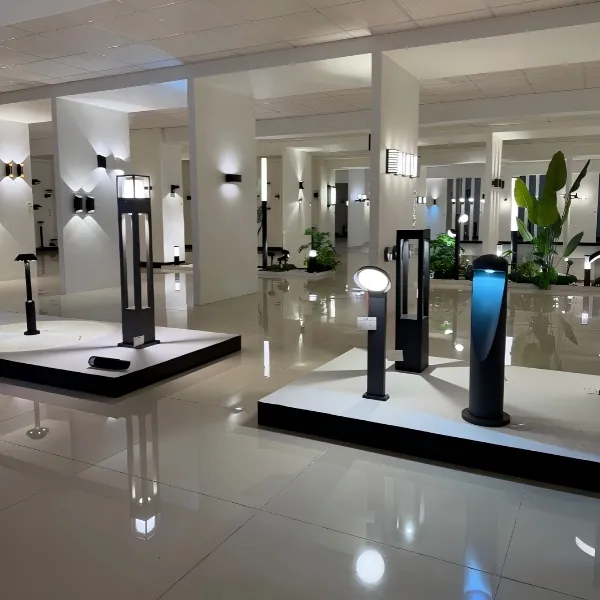
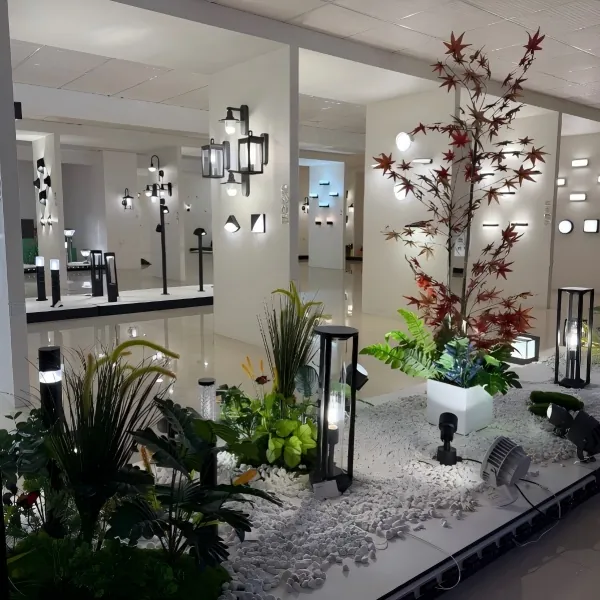
We operate a 7,000-square-meter production workshop and a 1,100-square-meter showroom, with OEM and ODM support for B2B customers. Keyida also develops new products each quarter, with many designs based on private molds. CE, RoHS, and SAA certification support is available for relevant product requirements.
For custom projects, buyers may also consider finish, light color, sensing functions, drawings, instructions, and product images. These details do not change electrical efficiency directly, but they affect specification work, installation coordination, retail presentation, and long-term maintenance planning.
A Better Way to Compare the Two Systems
Neither voltage is automatically more efficient in every application. A well-designed 12V layout can perform effectively when runs are controlled and transformer losses are managed. A 120V layout can be more practical over longer distances because lower current reduces cable-loss concerns.
The better garden lighting system is the one matched to the site, load, cable distance, fixture design, and maintenance plan. For B2B buyers, comparing these factors together produces a more useful decision than focusing on supply voltage alone. Efficiency comes from the complete system and how well its electrical and lighting components work together.