Outdoor lighting sold through professional channels has to do more than look attractive on display. Buyers also need to consider electrical safety, weather exposure, installation, maintenance, and market requirements. For distributors and building-material retailers, understanding these factors makes product comparison more practical and helps purchasing teams compare products with clearer technical criteria before placing repeat, large, or project-based orders.
When evaluating wholesale outdoor lighting, we suggest starting with standards and application conditions rather than price alone. A suitable product should match the installation environment, target market, maintenance method, and light-source structure.
Why Standards Matter in Outdoor Lighting
Outdoor fixtures face rain, humidity, dust, temperature changes, and long operating hours. These conditions can affect housings, electrical parts, seals, and surface finishes. Buyers should therefore evaluate the complete fixture instead of judging quality from appearance alone.
Electrical compliance is another important part of product planning. Different markets may require different certifications or documents. CE, RoHS, and SAA can support entry into relevant markets, but buyers should still confirm the exact requirements of the destination country and intended application.
Product consistency also matters in bulk purchasing. Materials, assembly, drivers, LED chips, surface treatment, and packaging need controlled production so that finished units remain consistent across a commercial order.
Housing Materials and Surface Treatment
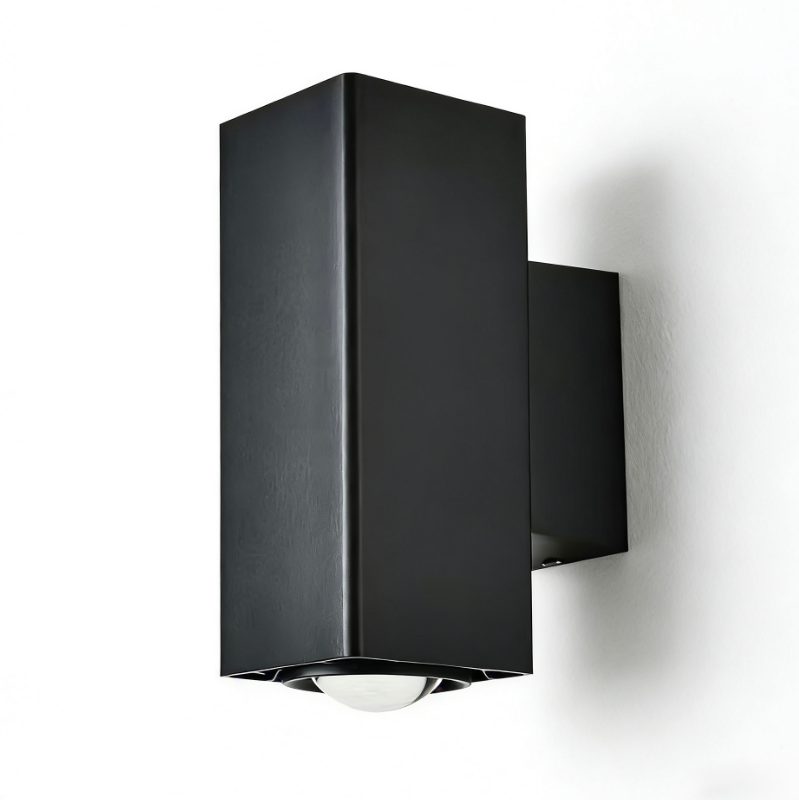
Aluminum is widely used for modern outdoor fixtures because it supports practical production and varied housing forms. The structure should be considered together with the lampshade material. PC and acrylic covers, for example, can suit different fixture designs and light effects.
Surface preparation matters as much as coating. Fine grinding before painting can improve the finished appearance and provide a more uniform surface for coating. This is especially relevant for modern minimalist fixtures, where clean edges and simple surfaces make small defects easier to notice.
For custom outdoor lighting, material selection should be discussed early. Changes to housing structure, color, cover, or light-source arrangement may affect tooling, assembly, waterproof design, and production planning.
Waterproofing Is a Complete System
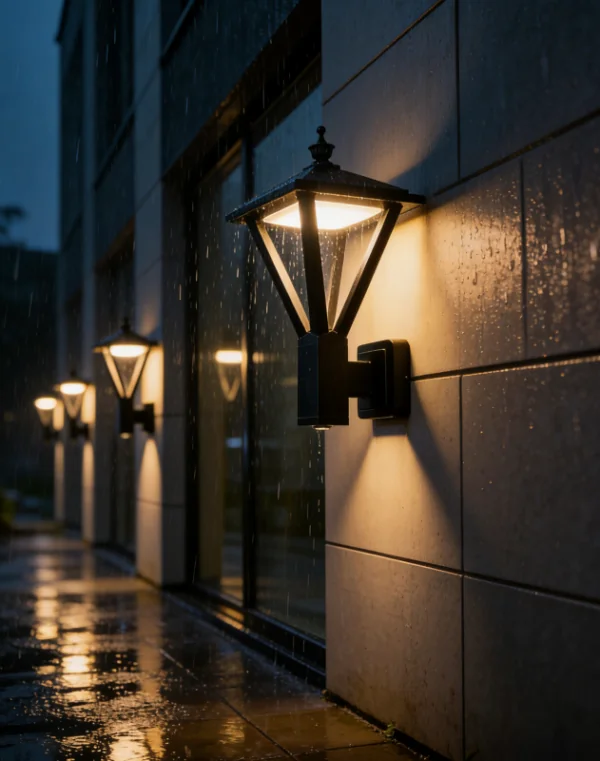
Outdoor buyers often ask whether a fixture is waterproof, but performance depends on several details. Housing joints, covers, cable entries, sealing parts, and installation orientation all influence resistance to water ingress. Good design needs these elements to work together.
Installation conditions also matter. Wall lights, garden lights, lawn lights, and pathway fixtures do not face identical environments. A sheltered wall position may receive less direct rain than an open garden area, so construction requirements can differ.
Maintenance should remain part of the review. Seals, covers, drivers, and light sources may need service during use. A structure that allows practical access can make after-sales work easier for project operators and distributors.
Light Sources, Drivers, and Replaceable Options
LED performance depends on both the chip and driver. Stable electrical components support consistent operation, but buyers should also ask whether they can be replaced. Replaceable parts can lower maintenance pressure when one internal component needs service.
Some markets prefer conventional lamp holders. A fixture platform that supports both integrated LEDs and E27 lamp holders gives distributors more flexibility when planning product ranges.
At Keyida, we develop modern small outdoor fixtures for B2B buyers. Our wall, garden, lawn, and related lighting can support OEM and ODM projects, helping customers adapt appearance, light-source options, and functions to different markets.
Smart Functions and Project Customization
Modern outdoor lighting may include functions beyond basic illumination. CCT adjustment can provide different color-temperature options, while RGB functions suit projects that require decorative color effects.
Radar sensing and PIR sensing can also be integrated when a project needs motion-responsive lighting. These functions should be chosen according to the application rather than added without a clear purpose.
Color customization is another practical requirement. Black and gray are common engineering colors, while other finishes can be developed for specific projects. Drawings, high-resolution images, and instruction documents also help buyers review products before bulk ordering.
What Buyers Should Check Before Ordering
A practical wholesale outdoor lighting review should cover the target market, certification needs, housing material, light-source structure, waterproof design, color, smart functions, packaging, and after-sales terms. MOQ should also be confirmed before a range is finalized.
Our standard MOQ is 200 pieces per model, while customized colors start from 800 pieces per model. We provide a three-year warranty. Clear project information before production helps both sides confirm the required configuration and reduce unnecessary changes.
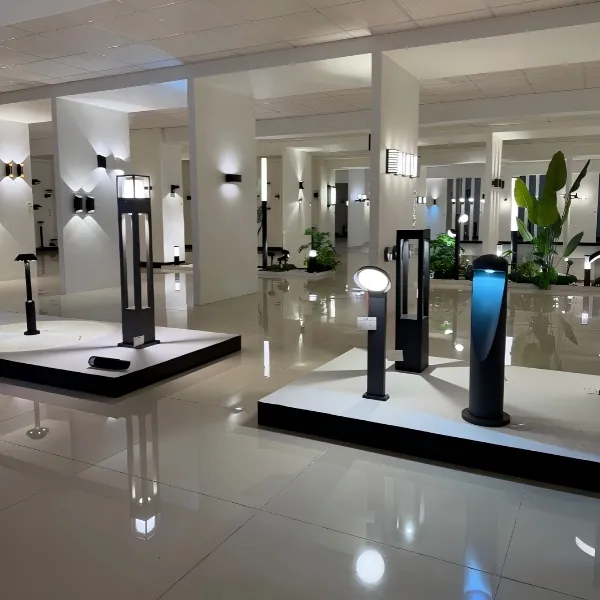
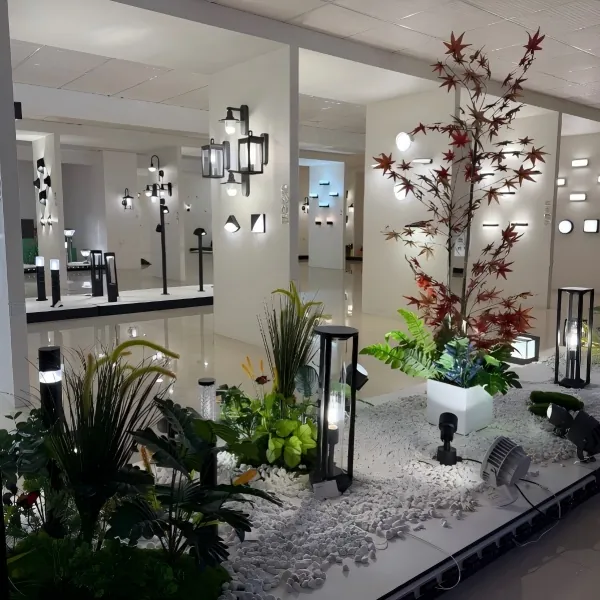
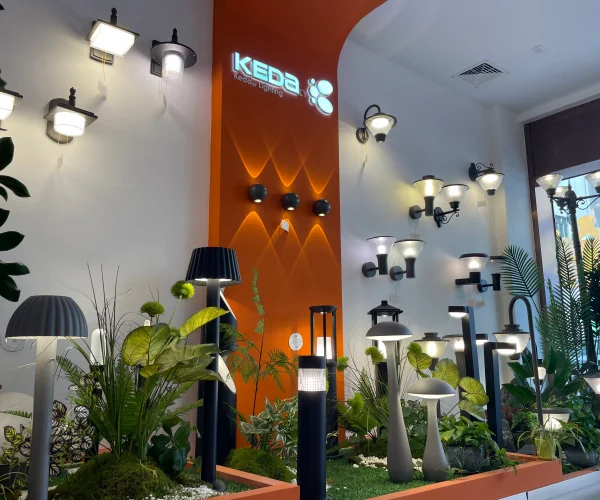
With Keyida, most new collections use private-mold designs, and new products are introduced quarterly. Our 7,000-square-meter production workshop and 1,100-square-meter showroom support development, display, and batch cooperation for overseas B2B customers.
Building a More Reliable Product Range
Standards provide a framework, but successful sourcing also depends on how well a fixture matches its real application. Buyers should connect compliance, materials, waterproofing, electrical parts, maintenance, and customization instead of reviewing each item separately.
The same principle applies to custom outdoor lighting. A useful solution begins with clear market requirements and translates them into structure, light source, finish, function, and production specifications. This gives distributors, lighting stores, and building-material retailers a clearer basis for comparing products and planning a range that can be supported over time.