Urban lighting projects are becoming more varied as public spaces, residential communities, and commercial landscapes adopt different design styles. Project teams often need lighting products that are easy to specify, maintain, and adapt to different installation conditions. This is one reason modular outdoor lighting is receiving more attention. It gives designers and buyers more flexibility when planning repeated installations across large sites.
Why Modular Design Matters in Urban Projects
Urban projects rarely use one lighting point in isolation. Entrances, pathways, low walls, terraces, and landscaped areas may all need coordinated fixtures. For buyers, modular design can simplify product selection because similar structures can be used across several locations while maintaining a consistent appearance.
This approach is useful for outdoor pier mount lights installed on columns, low walls, or entrance features. These products need to match the surrounding architecture while remaining practical for maintenance. A modular structure can make it easier to select suitable light sources, finishes, and functional options without redesigning the complete fixture.
Light Source Flexibility Supports Project Planning
Lighting requirements can vary between projects. Some sites prefer integrated LED solutions, while others use replaceable lamp holders because maintenance teams are familiar with standard bulbs. The choice often depends on local service practices, replacement costs, and project specifications. For multi-site projects, a familiar lamp format can also simplify spare-part planning and reduce the need to stock several different replacement components.
For this reason, outdoor pier mount light fixtures with replaceable lamp structures can be useful in urban applications. An E27 lamp holder gives buyers more freedom to select a suitable bulb based on color temperature, brightness, or replacement needs.
At Keyida, we develop modern small outdoor lighting with project flexibility in mind. Our range includes designs that can use LED solutions or lamp-holder structures, depending on project needs.
Material Choices Affect Outdoor Performance
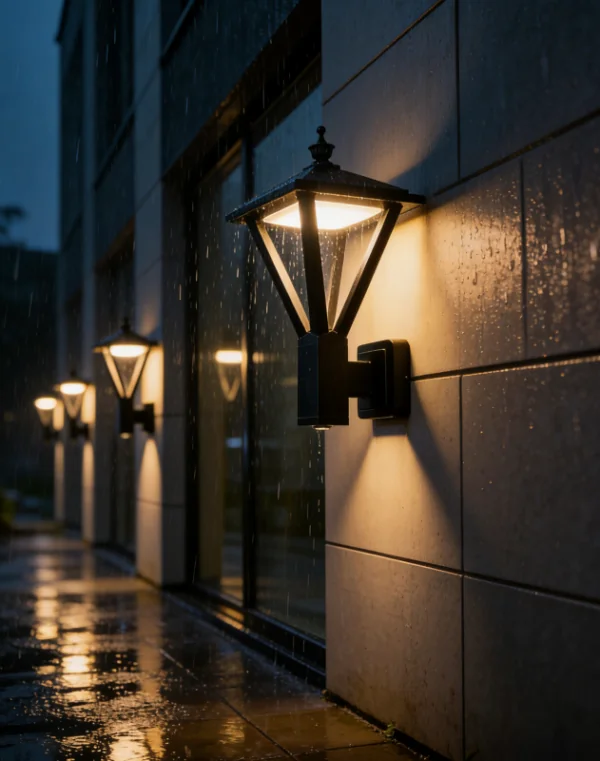
Outdoor fixtures are exposed to rain, dust, temperature changes, and daily environmental wear. Material selection therefore affects appearance and service performance.
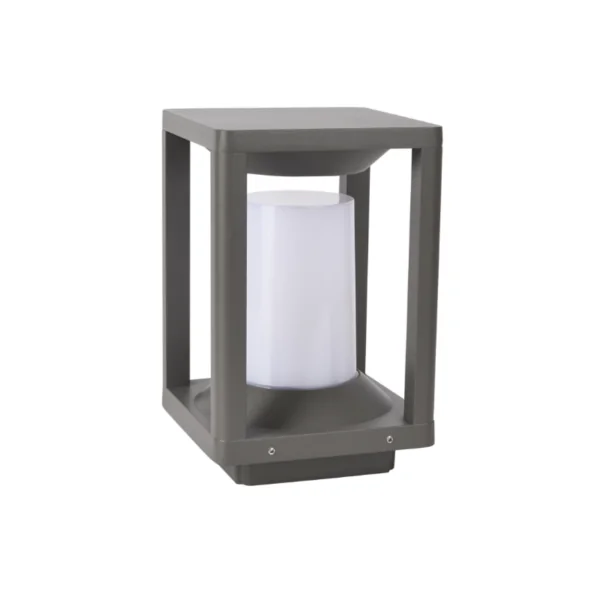
The B0473 outdoor light uses a die-casting aluminum housing with a PC lampshade. Its IP54 rating supports use in suitable outdoor locations, while the Ø150 × H220 mm size keeps the fixture compact. The 1×E27 light source also makes lamp replacement straightforward for maintenance teams.
Surface treatment also deserves attention. Careful polishing before painting can improve the finished housing and help the coating form more evenly. A consistent surface finish is particularly relevant when multiple fixtures are installed within the same entrance, courtyard, or landscape area.
Visual Consistency Across Different Spaces
Modern developments often combine several functional zones within one project. A residential entrance may connect to a garden path, courtyard, retail frontage, or shared outdoor area. Lighting products therefore need to work with different spaces without creating a fragmented visual language.
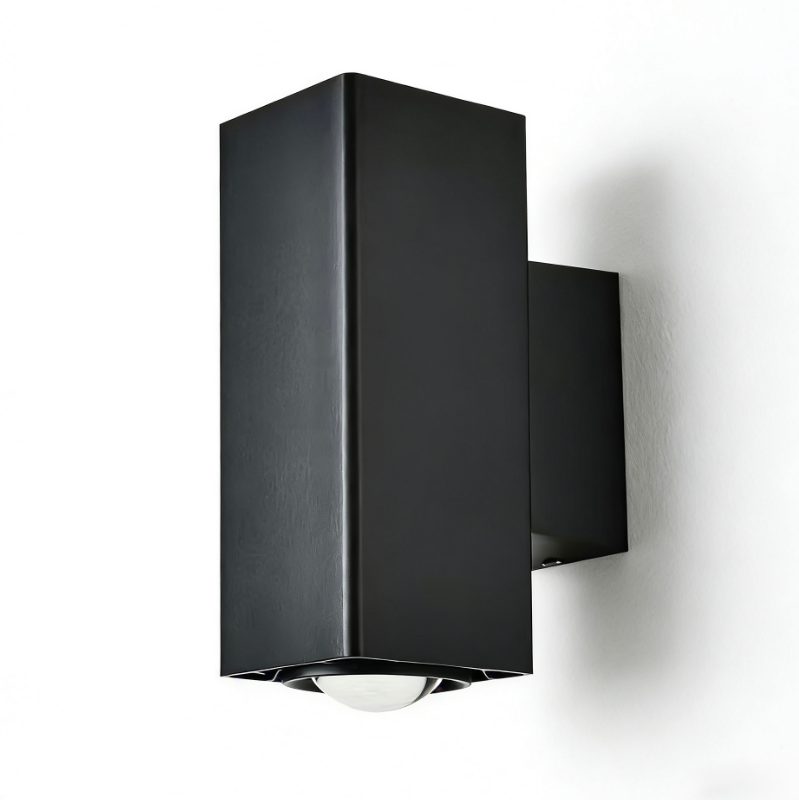
Well-planned outdoor pier mount lights can support this consistency. Their compact form allows them to be used on entrance pillars, boundary walls, and landscape structures.
For B2B buyers, private-mold designs can also reduce visual similarity with common market products. We release new products every quarter, and a large part of our range uses private molds. This gives lighting stores and building-material retailers more options when selecting differentiated product lines.
Customization Helps Match Regional Requirements
Urban projects in different regions may have different expectations for color, lighting effect, sensing functions, and certification. Black and gray remain common engineering colors, but customized finishes may be needed to match building façades or landscape materials. This gives project teams more room to coordinate lighting with architectural finishes without changing the basic fixture structure.
Functional options can also support different project needs. CCT adjustment, RGB lighting, radar sensing, and PIR sensing can be considered when the application calls for more flexible control.
For buyers comparing outdoor pier mount light fixtures, technical documentation is also important. Product drawings, high-resolution images, and instruction manuals help project teams review dimensions, installation details, and visual appearance before ordering. Clear documentation can reduce misunderstanding during specification and purchasing.
Supply Capability Is Part of Modular Planning
Modular product selection is only useful when supply remains stable during project execution. Urban developments may involve phased construction, repeated orders, or replacement demand after installation. Buyers therefore need to consider production capacity together with product design.
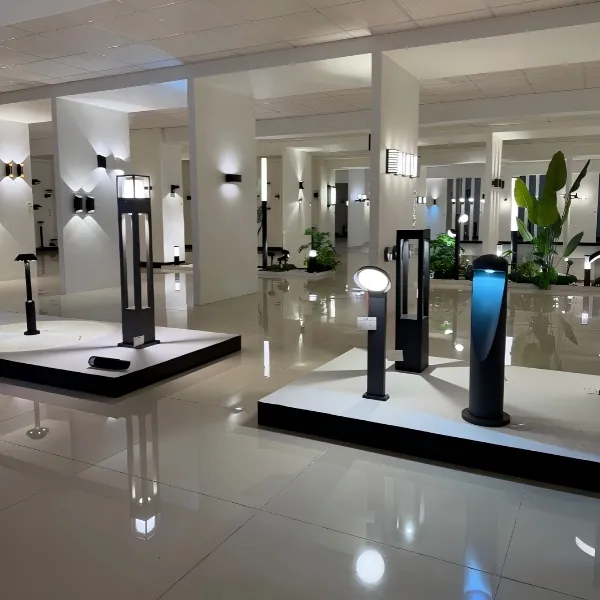
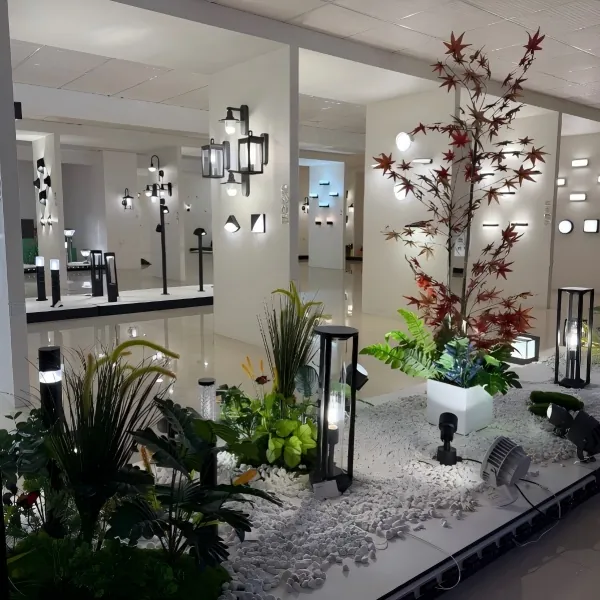
Our company operates a 7,000 m² production workshop and a 1,100 m² showroom. Keyida also supports OEM and ODM development for B2B customers. Regular models have an MOQ of 200 pieces per model, while customized colors start from 800 pieces per model. These terms help buyers plan stock and project quantities more clearly.
Certification can also influence regional procurement. CE, RoHS, and SAA options support projects and distribution programs that require relevant compliance documentation for different markets.
A More Practical Direction for Urban Lighting
The growing interest in modular outdoor lighting comes from practical project needs. Buyers want products that fit repeated installations, support manageable maintenance, and adapt to different visual and technical requirements. Material choice, lamp structure, finish, documentation, and customization all affect how well a fixture fits a project.
For urban planners, distributors, and lighting retailers, the useful question is not simply whether a fixture looks modern. A better approach is to review how easily the product can be specified, supplied, maintained, and adapted across several project zones. That wider view can make outdoor lighting plans more consistent and easier to manage over time.