When designing lighting plans for commercial plazas, luxury residential communities, or hospitality venues, selecting the right fixture goes beyond mere aesthetics. As professionals in the outdoor lighting industry, we know that structural requirements, light distribution, and specifically, mounting height, dictate the success of a project. At Keyida, our 25 years of experience in OEM and ODM manufacturing have taught us that precision is essential. Two of the most common—and occasionally confused—fixtures specified in landscape architecture are pier mounts and bollards.
For B2B clients, electrical contractors, and landscape architects, understanding the technical distinctions between outdoor pier mount lights and bollard lights is crucial for creating effective, safe, and visually appealing outdoor environments. Here is our comprehensive guide to choosing between these two lighting solutions based on their mounting heights and structural applications.

Defining the Core Differences in Structure
While both fixtures serve to illuminate pathways, perimeters, and architectural features, their fundamental designs and installation methods are entirely different. Bollard lights are standalone, vertical post-mounted fixtures. They act as both the housing for the light source and the mounting structure itself. Engineered to be installed directly into the ground or bolted to a concrete foundation pad, bollards require no secondary structure to elevate them. They are independent units designed to cast light downward and outward, offering both illumination and, in some cases, a physical perimeter barrier.
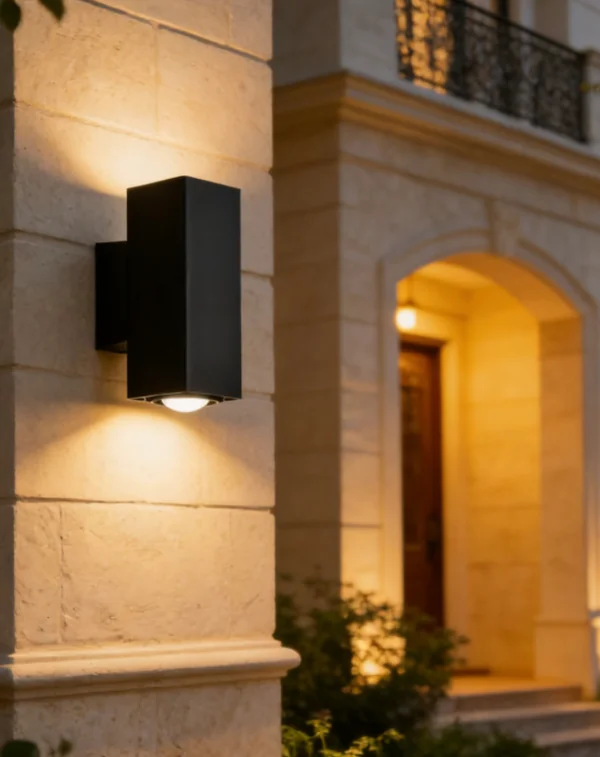
Conversely, outdoor pier mount lights (sometimes referred to as column lights or pillar tops) do not have an integrated vertical post. They feature a flat base designed to be mounted onto a pre-existing elevated structure. You will rarely find a pier mount installed directly at ground level. Instead, these luminaires are engineered to sit atop stone pillars, brick columns, deck posts, or masonry caps. They rely entirely on the architecture of the site to provide their height and structural presence.
The Impact of Mounting Height on Lighting Design
The most significant functional difference between these two fixtures is how their height affects light distribution. The mounting height directly influences the spread of light (the footprint), the intensity of illumination at ground level, and the potential for glare.
The Standard Height of Bollard Lights
Because bollard lights are self-contained, their height is predetermined during the manufacturing process. The industry standard for commercial and high-end residential bollards ranges from 30 to 42 inches (approximately 76 to 106 centimeters).
This specific height is engineered for a reason. At roughly three feet tall, a bollard light source is positioned below the average adult’s eye level. This downward-directed light creates a localized pool of illumination on the walking surface, effectively highlighting steps, pathway edges, and trip hazards without blinding pedestrians. If a bollard were significantly taller—say, 60 inches—it would cast light directly into a person’s eyes, causing uncomfortable glare and defeating its purpose as a safe pathway guide. In commercial settings, this 30 to 42-inch height also makes bollards highly effective for marking boundaries between pedestrian walkways and vehicular traffic.
Note: This height standard only applies to low-profile pathway bollard lights. Tall landscape column lamps follow different dimension specifications.
The Variable Height of Pier Mount Lights
Unlike bollards, the mounting height of outdoor pier mount lights is completely variable and depends entirely on the structure they are attached to. This variability provides landscape architects with immense design flexibility.
When a pier mount is installed on a short, 24 inch garden wall, it functions similarly to a bollard, casting low-level light across a patio or flower bed. However, when mounted atop a 72 inch brick column at a gated estate entrance, the same fixture transforms into an elevated beacon. At this height, the light spreads much further, illuminating a wide radius for vehicular safety and security identification.
This versatility is why outdoor pier mount lights modern designs are so highly sought after for complex landscape projects. By utilizing the same fixture on varying architectural elements—from low deck posts to towering entrance columns—designers can maintain a cohesive, modern aesthetic across a property while fulfilling distinctly different lighting tasks.
Note: The actual light spread also depends on the lamp’s built-in beam angle. Narrow-beam pier mount lights will have a shorter coverage radius even at high mounting positions.
Selecting the Right Fixture for Your B2B Project
When specifying fixtures for a large-scale project, how do you decide which to use? The decision hinges on the existing site architecture and your primary lighting goal.
Choose bollard lights when you are illuminating long, open pathways, public parks, or commercial walkways where no existing walls or columns exist. They are the ideal choice when you need ground-level safety lighting and a clean, unobtrusive visual profile.
Choose pier mounts when your project features existing masonry, fencing columns, or architectural pillars. Utilizing these structures as lighting bases integrates the illumination seamlessly into the hardscape. Furthermore, if you are outfitting a luxury property, incorporating outdoor pier mount lights modern fixtures onto sleek concrete or stone columns elevates the perceived value and architectural sophistication of the space far more than a standard pathway light.
Partnering for Manufacturing Excellence
Understanding the nuances of fixture height and light distribution is vital, but specifying hardware built to endure is equally important. At Keyida, we manufacture both premium bollards and pier mount luminaires using heavy-duty, die-cast aluminum and multi-step electrostatic powder coating.
Whether you need a run of standard 36-inch pathway bollards for a corporate campus or custom-designed, elevated pier mounts for a luxury resort, our extensive OEM and ODM capabilities are at your disposal. We engineer our products to meet strict commercial ingress protection ratings, ensuring that whether your fixtures sit at knee height or top a towering entryway column, they perform flawlessly year after year. By choosing a dedicated B2B manufacturing partner, you guarantee that your precise lighting designs are brought to life with uncompromising quality.