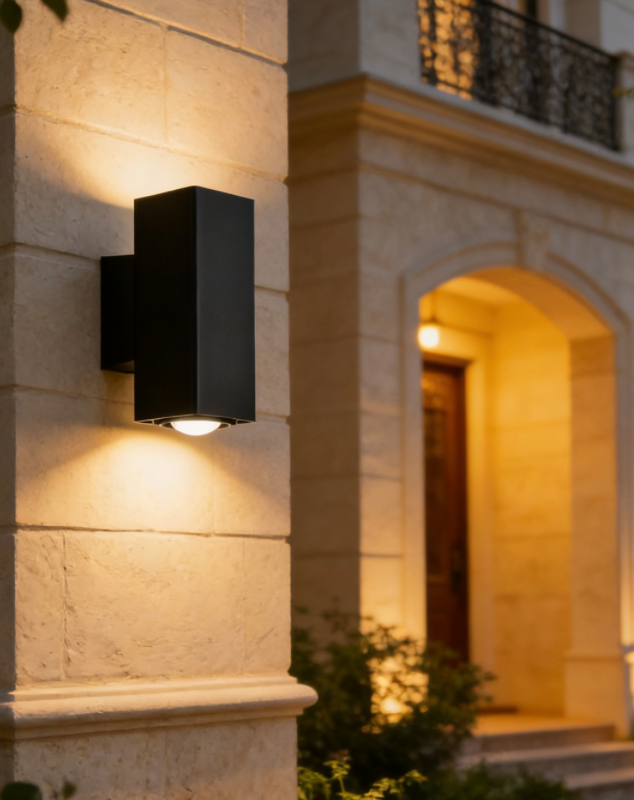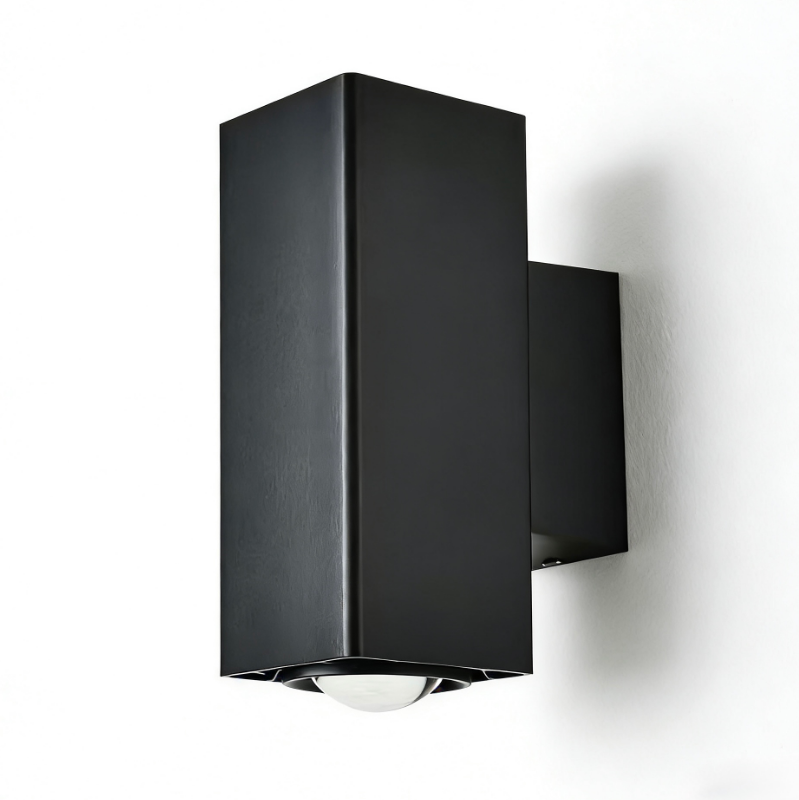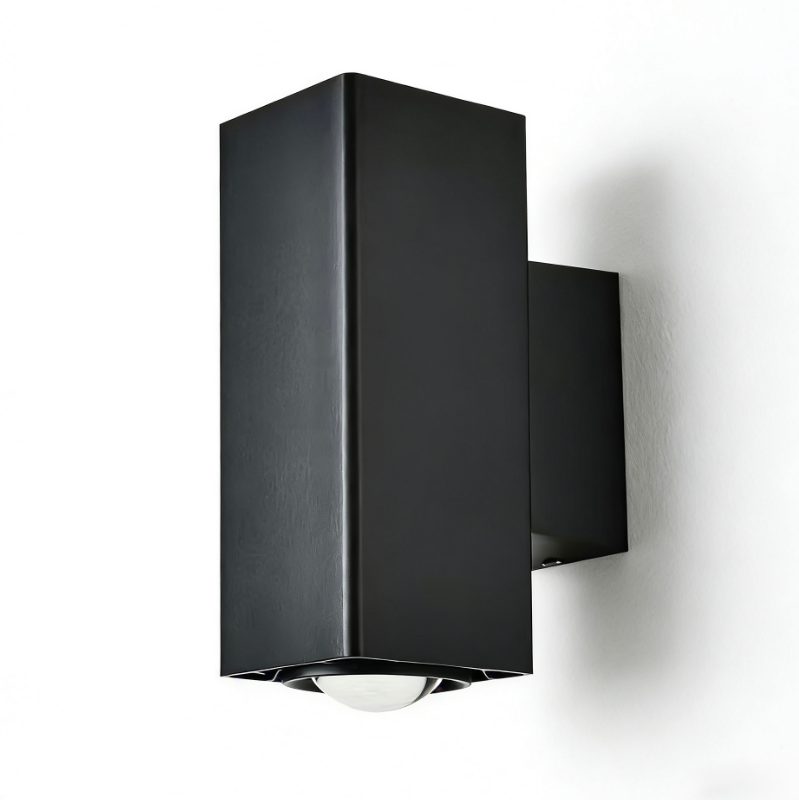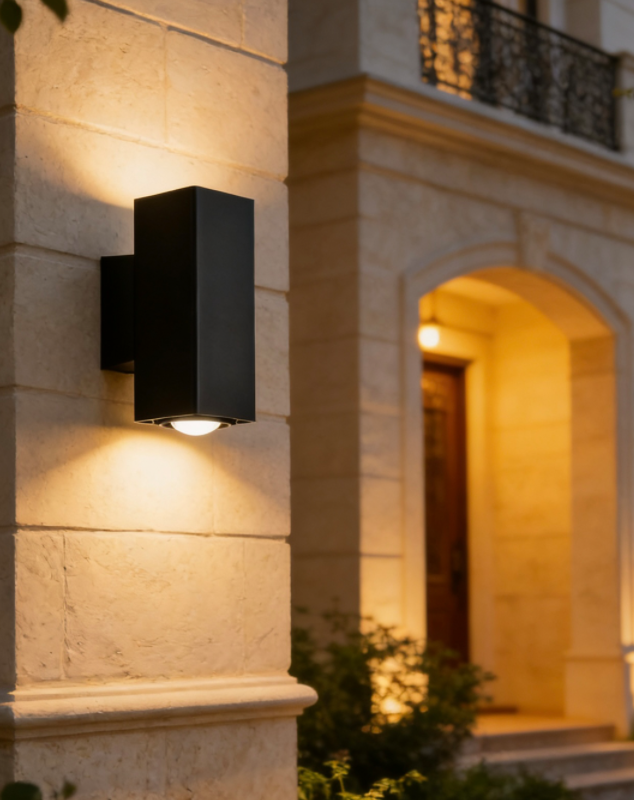
An outdoor wall lamp can change how a building meets the street, courtyard, or garden. A slim fitting may recede into a minimalist façade, while a substantial form can reinforce an industrial palette. For lighting distributors, building-material retailers, and project designers, the choice affects how a property is read at night and how a coordinated package is specified.
Consider a hotel renovation with concrete walls, metal railings, and a small entrance garden. A quiet fixture may leave the architecture in focus, while a stronger object can echo the structure. Either direction can work when proportions, finish, light role, and maintenance needs match the site.
The Style Question Starts with the Building
Minimalism usually relies on restraint. A simple silhouette, limited detail, and a finish that sits beside the wall suit contemporary villas, apartment corridors, boutique hotels, and landscaped courtyards where architecture or planting provides the interest.
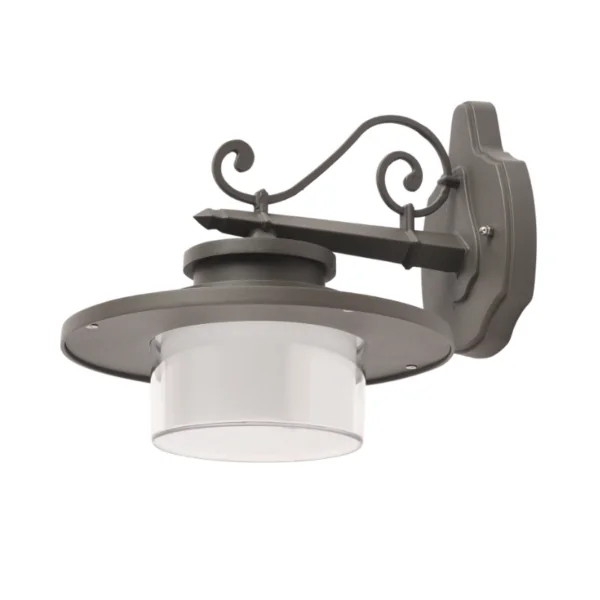
Industrial styling takes a different route. It treats the fitting as part of the building’s visual language. A heavier profile, visible hardware, or stronger contrast between lamp and wall can support brick, concrete, steel, and timber.
The distinction is not a choice between refined and rough. It is a question of emphasis. Minimalist lighting reduces attention on the fixture. Industrial lighting gives the fixture a more visible role. A project team can compare elevation drawings and nighttime viewpoints before selecting the direction that supports the property concept.
When a Minimalist Wall Lamp Fits the Brief
A minimalist wall lamp is useful when circulation and comfort need quiet support. Along an apartment walkway, a compact fitting can mark doors without competing with signage. At a villa entrance, a restrained form can frame the doorway while leaving stone, render, or planting as the focus.
Scale matters in this setting. A fitting that is too large can crowd a narrow wall. One that is too small may disappear beside a broad entrance. Review wall width, mounting height, viewing distance, and nearby furniture. These checks help a designer select a proportion connected to the architecture.
Surface quality also influences minimalist results. The Wall Lamp page explains that the fixtures use aluminum bodies and receive sanding before painting for a quality finish. A smooth, carefully prepared surface can support a clean appearance during daytime inspections, which matters when project owners evaluate both operation and curb appeal.
Where Modern Outdoor Wall lamps Support a Stronger Visual Statement
Industrial applications often need the lamp to carry more visual weight. A fixture at a restaurant terrace can define dining and circulation. On a warehouse-style hotel, wall lighting can repeat columns or openings. At a retail entrance, a visible fitting can keep the doorway recognizable after sunset.
The phrase modern outdoor wall lamps covers more than one look. A modern form can be slim and discreet, or use a bold outline with clear geometry. The suitable direction depends on façade materials and viewing distance. Designers can compare the front elevation with views from the driveway and pedestrian route.
We link our products with building exteriors, hotel entrance walls, home façades, and space-limited areas. This range can help B2B buyers preparing schedules for several property types. The same product family can be discussed across projects while visual emphasis changes with the architecture.
Compare Light Role, Not Only Appearance
Style becomes more useful when connected to a task. A pair of lamps beside a doorway can create a balanced arrival point. A single fitting near a service passage can guide staff. A row along a courtyard wall can establish rhythm and clarify the route.
Review glare, shadows, and the relationship between the illuminated surface and nearby windows. A minimalist fitting may suit a quiet passage, while an industrial form may fit a feature wall. The comparison is how each option supports the scene, not which style appears fashionable in isolation.
We also support an interchangeable lamp-head option, replaceable LED chips and drivers, and an energy-efficient LED wall lamp outdoor application. These details open a maintenance discussion. Replaceable components can matter when a property manager plans future servicing, while a lamp-head option may support an agreed design revision.
Material, Finish, and Weather Conditions
Outdoor wall lighting sits close to rain, dust, humidity, and routine cleaning. Our wall lamps use aluminum bodies and are designed for outdoor building and yard applications. Selection should still consider wall material, drainage, cable route, and inspection access.
Our outdoor wall lamps feature IP65 waterproof protection, making them ideal for building façade applications where reliable performance in challenging weather conditions is essential. This robust waterproof rating makes our wall lamps deliver consistent illumination and long-lasting durability, helping distributors confidently specify the right lighting solution for each project.
Finish decisions also play a key role in procurement. Black or gray finishes may suit a restrained design palette, while other projects may require a coordinated custom color. At Keyida, we support custom colors and offer OEM or ODM development services, allowing buyers to align the visual design with product specifications, documentation, and approval samples.
A Practical B2B Selection Framework
When comparing minimalist and industrial options, create a short matrix. Record façade material, mounting space, visual emphasis, viewing distance, maintenance access, and lamp role. Add approval documents such as drawings, product images, and instructions. This helps designers, contractors, and purchasing teams review the same criteria.
Supplier capability belongs in the same conversation. We have a 7,000 m² modern plant, a 1,100 m² showroom, quarterly product launches, and mostly proprietary molds.We also have CE, RoHS, and SAA certifications. These can help B2B customers assess development support for coordinated forms or a custom brief.
The final choice depends on the property story. Minimalist fixtures can keep architecture calm, while industrial forms can add structure where a façade benefits from a stronger accent. Both support a professional installation when material, finish, light role, and service approach are reviewed together.
At Keyida, we work with lighting retailers, building-material distributors, designers, and project owners seeking modern outdoor wall lamps for real applications. We can discuss the intended façade, mounting conditions, custom development, and documentation needed for review. Our OEM and ODM support also allows a project brief to be discussed with production teams early. A style-led brief, supported by verified product information, gives each project a clearer path from concept to outdoor lighting selection.