Lighting depth is not created by brightness alone. It comes from light direction, mounting height, surface texture, and movement through a space. Ceiling downlights mainly illuminate from above, while a LED lamp on wall adds light from the side. When these layers are planned together, exterior areas can feel more structured, readable, and visually balanced.
Why Wall and Ceiling Light Behave Differently
Ceiling downlights usually provide a downward beam. This makes them useful for entrances, covered walkways, porches, and areas where clear ground illumination is needed. Their position establishes the main lighting level and makes circulation areas easier to understand.
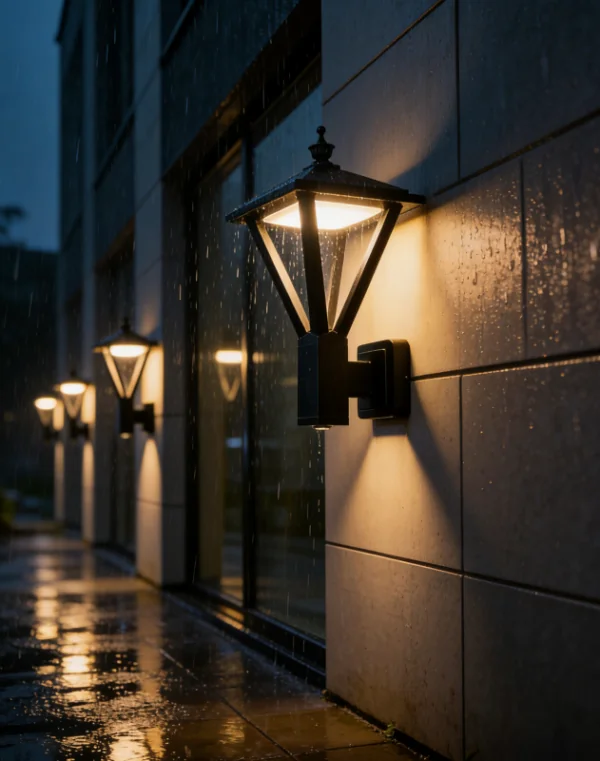
Wall-mounted lighting works differently. It brings light closer to vertical surfaces and building details. An LED outdoor wall sconce can reveal wall texture, frame doorways, or mark transitions between indoor and outdoor zones. Side lighting can add contrast that a ceiling-only layout may not provide.
For project buyers, the key point is not choosing one format over the other. Instead, buyers should ask how each fixture supports a specific layer. Ceiling light handles general visibility, while wall light can strengthen depth and visual rhythm.
How Layered Lighting Creates Spatial Depth
Depth becomes more noticeable when different surfaces receive different levels of light. If the ceiling is the only source, walls may appear flat or disconnected. Adding side lighting gives the eye more reference points and makes architectural boundaries easier to read.
We often consider wall position, fixture spacing, beam direction, and surrounding materials together. A narrow passage may need fewer wall fixtures than a wide facade. Textured walls can also benefit from side illumination because highlights and shadows become more visible.
The same principle applies to retail and commercial outdoor projects. Building material stores and lighting dealers often need products that fit several facade styles. We therefore focus on modern compact forms that support practical lighting plans without making the fixture visually heavy.
Where Ceiling Downlights Work More Effectively
Ceiling downlights are useful where the ceiling structure provides a clear mounting surface. Covered entrances, balconies, canopies, and sheltered corridors are common examples. Their downward position gives direct illumination to the floor and nearby activity zones.
They also suit projects where designers want the fixture to remain visually quiet. Recessed or compact ceiling lights can support the scheme without drawing much attention.
However, downlights alone may leave vertical surfaces underlit. This can reduce depth around doorways, columns, decorative walls, and garden boundaries. Adding a second lighting layer can make the space feel more complete without simply increasing ceiling brightness.
Where Wall Lighting Adds More Value
Wall lighting is useful when the design needs to emphasize the building envelope. It can guide attention across a facade and create a clearer relationship between doors, windows, paths, and landscaping. In this role, an LED lamp on wall becomes part of the spatial composition rather than only a source of light.
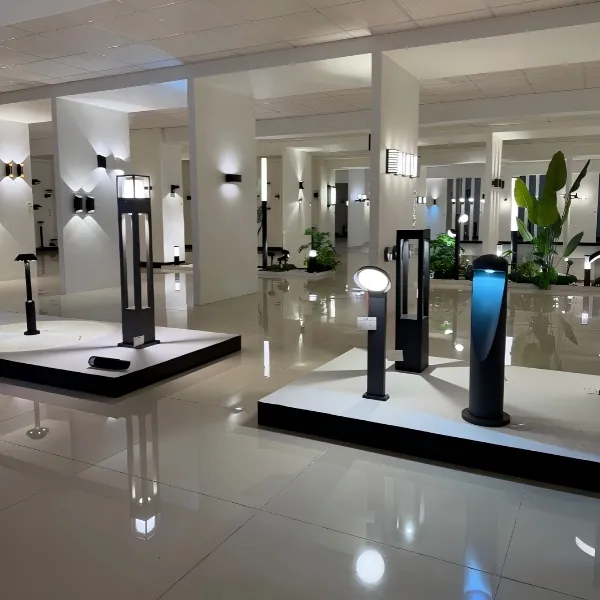
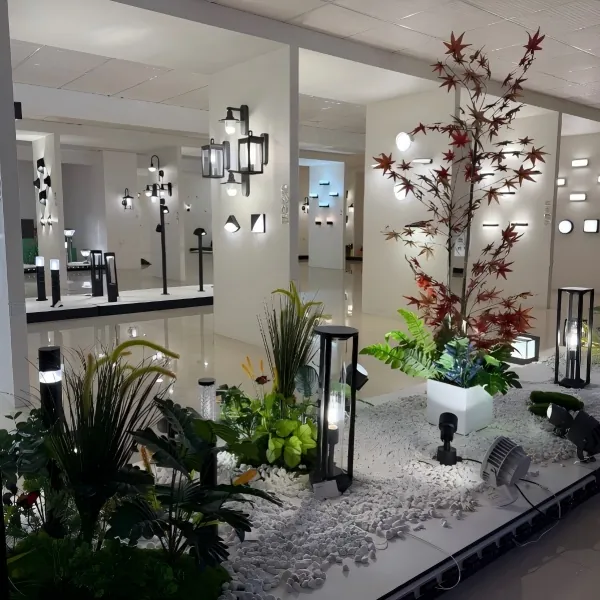
For lighting stores, wall-mounted products also provide visible design variety. Shape, finish, diffuser material, and light direction influence how the fixture looks in displays and final projects. This matters when buyers compare products for modern projects.
At Keyida, we develop modern small outdoor lighting for B2B buyers, including lighting stores, building material retailers, and project partners. Our work covers design, production, sales, and customization, with private-mold products forming an important part of the range.
A Practical Product Example for Layered Designs
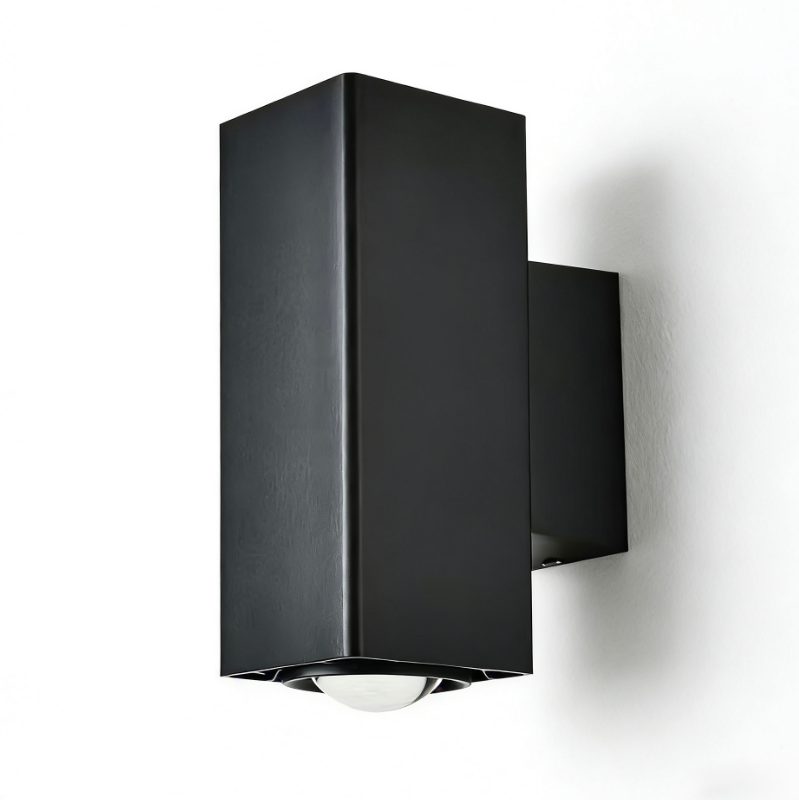
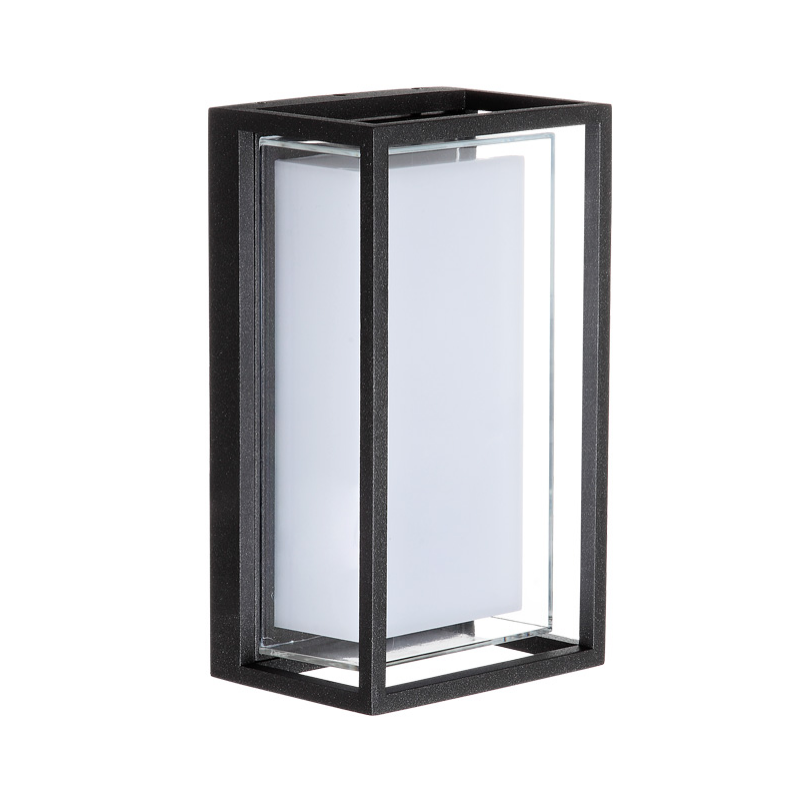
One example is the LED Outdoor Wall Sconce G0936. It uses a die-cast aluminum housing with a PC lampshade and is rated IP65 for outdoor use. The fixture is equipped with an Epistar SMD 12W LED chip and a KEDA Driver.
Its input range is 85–265V AC at 50/60Hz, while the body size is L240 × W139 × H98 mm. The product carries a three-year warranty. The aluminum body receives surface finishing before painting for a cleaner appearance and more durable coating.
For projects that combine ceiling lighting with a LED outdoor wall sconce, the G0936 can serve as the vertical lighting layer. Its compact wall-mounted form suits entrances, exterior passages, or facade sections where designers need more separation between surfaces.
How Buyers Can Plan the Two Layers Together
A useful starting point is to define the task of each fixture before selecting models. Ceiling downlights may handle circulation and general visibility. Wall fixtures can support facade definition, wayfinding, or decorative emphasis.
Spacing should also be reviewed carefully. Too many fixtures can flatten the visual effect, while too few may create dark breaks between key areas. Designers should check mounting height, wall width, ceiling coverage, and viewing direction before finalizing the layout.
For B2B projects, maintenance also matters. Stable LED chips and drivers help reduce unnecessary replacement work. Replaceable structures can give buyers more flexibility. OEM and ODM options can support different color, function, and market requirements.
Building a More Balanced Outdoor Lighting Scheme
Good lighting depth usually comes from contrast, not from adding more fixtures. Ceiling downlights create the base layer, while wall-mounted lighting gives shape to vertical surfaces and architectural edges. The two formats work differently, which is why they can complement each other in the same project.
At Keyida, we support B2B partners with modern outdoor lighting, private-mold development, OEM and ODM services, and product documentation. Combining an LED outdoor wall sconce with ceiling downlights can create a clearer, more dimensional outdoor environment without making the lighting scheme unnecessarily complex.