Outdoor lighting affects more than nighttime visibility. For commercial properties, retail projects, and exterior renovation work, the right wall fixture also influences maintenance, energy use, appearance, and installation planning. A 20W fixture can be a practical choice when buyers need more output than low-power decorative lighting without moving to a much larger exterior luminaire.
For B2B buyers, switching to an LED outdoor wall sconce should be based on application needs rather than wattage alone. Wall height, beam direction, facade material, expected operating hours, and local weather all matter. When these factors are reviewed together, a 20W option can fit entrances, walkways, perimeter walls, and other exterior areas that need steady illumination.
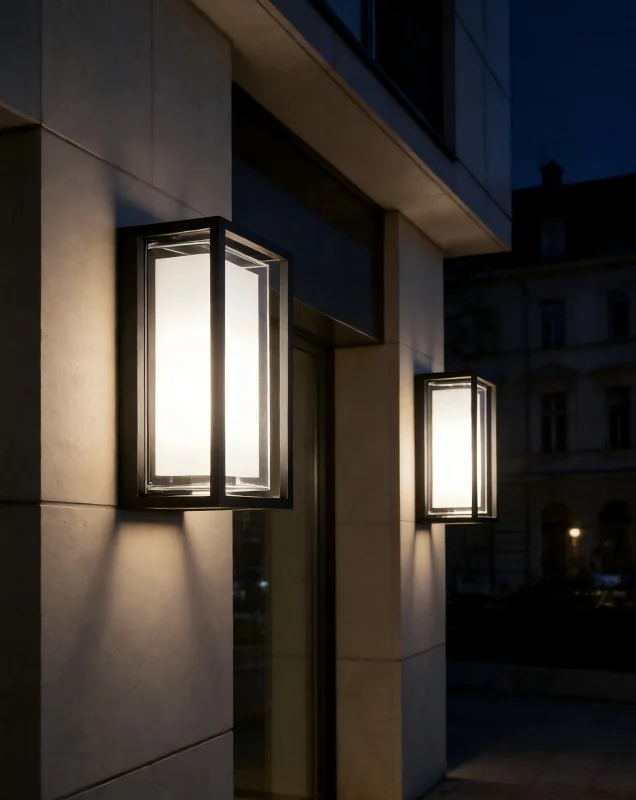
- Better Output for Medium-Sized Exterior Areas
The first reason is simple: 20W gives project planners more usable output for areas where smaller decorative lights may feel insufficient. It can suit building entrances, side passages, exterior columns, and wall sections that need stronger visual guidance after dark.
The second reason is flexibility. Buyers can use this wattage in projects that need a balance between decorative appearance and functional lighting. It is especially useful when one fixture needs to support both facade design and everyday visibility.
At Keyida, we often look at wall-light selection from the viewpoint of distributors, lighting stores, and project buyers. The goal is not to use higher wattage everywhere, but to match fixture output with the real size and purpose of the space.
- Lower Energy Use Than Traditional High-Consumption Options
The third reason is energy control. LED technology can provide useful exterior illumination while using less power than many older lighting formats. For projects with many wall fixtures, lower consumption can reduce the operating burden over time.
The fourth reason is easier planning for long operating hours. Hotels, commercial buildings, residential projects, and retail properties may keep exterior lights on for much of the evening. In these cases, efficient lighting can support more predictable energy management.
A well-designed LED outdoor wall light also gives buyers more freedom when they compare appearance, wattage, and fixture quantity. Instead of relying only on a high-power source, planners can distribute light more carefully across the facade.
- More Control Over Maintenance and Replacement
The fifth reason is simpler maintenance planning. Exterior lighting is exposed to rain, dust, temperature changes, and repeated switching. Stable LED chips and drivers help reduce avoidable service work, especially when projects use the same fixture across many locations.
The sixth reason is component flexibility. Some buyers prefer integrated LED structures, while others want replaceable light-source options such as E27 lamp holders. Choosing the right structure can make later servicing easier for lighting stores, contractors, and property managers.
For this reason, our product development also considers replaceability and practical service access. We support LED solutions as well as lamp-holder structures in suitable models, which gives B2B customers more options when they build product ranges for different markets.
- Stronger Suitability for Outdoor Conditions
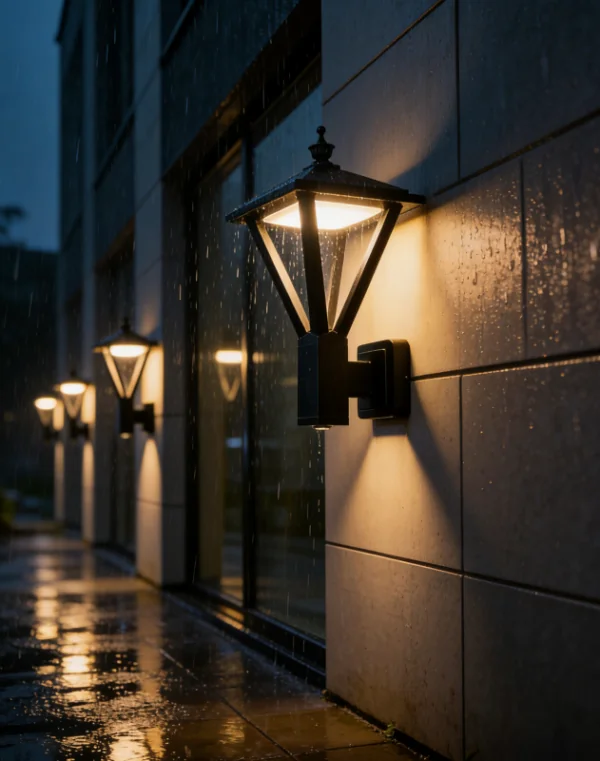
The seventh reason is weather resistance. Exterior wall lights need stable housings, suitable covers, and proper sealing. Aluminum bodies are commonly used because they provide structural strength while remaining practical for outdoor fixture design.
The eighth reason is surface durability. Careful polishing and finishing before painting can improve the final surface and help the coating perform better outdoors. This matters in projects where wall lights remain visible in rain, humidity, and changing temperatures.
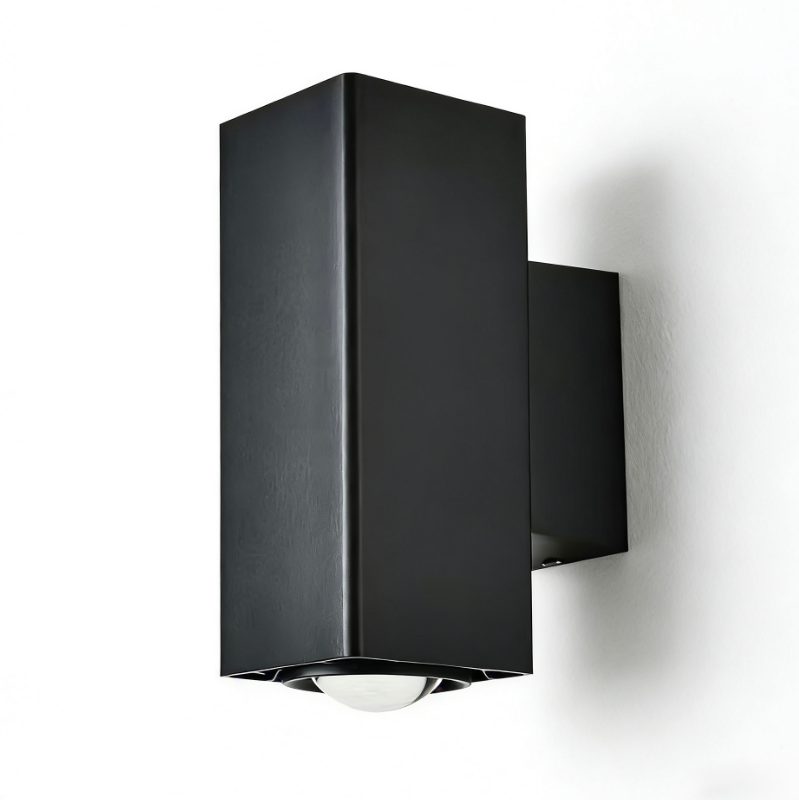
A useful example is the G0936. This LED outdoor wall sconce uses a die-casting aluminum housing with a PC lampshade and carries an IP65 rating. Its specification includes an Epistar SMD 12W LED chip, KEDA driver, 85–265V AC input at 50/60Hz, and a size of L240 × W139 × H98 mm. It also comes with a 3-year warranty.
- Better Fit for Modern Exterior Design
The ninth reason is appearance. Modern projects often need compact wall lights with simple lines rather than oversized decorative fixtures. A clean shape can work well with villas, apartment buildings, retail facades, and commercial entrances.
The tenth reason is product differentiation. For lighting stores and building-material retailers, a private-mold design can create a clearer visual identity on the shelf or in a project sample board. Different finishes, CCT options, RGB functions, or sensing features can further expand the product range.
Our company develops modern small outdoor lights and supports OEM and ODM projects. We also provide options such as CCT adjustment, RGB lighting, radar sensing, PIR sensing, and custom colors for suitable projects. These functions allow buyers to build a more targeted LED outdoor wall light assortment for regional markets.
Choosing the Right 20W Fixture for a Project
Switching to 20W makes sense when a project needs more useful output, stable long-hour operation, easier maintenance, outdoor durability, and a modern visual style. However, wattage should still be matched with mounting height, fixture spacing, beam direction, and the surrounding environment.
For distributors and project buyers, product selection is easier when technical information, drawings, images, and after-sales support are available from the start. Keyida supports B2B cooperation with product documentation, OEM and ODM development, and a range of modern outdoor lighting designs. A carefully selected 20W fixture can then become part of a practical and maintainable exterior lighting plan.