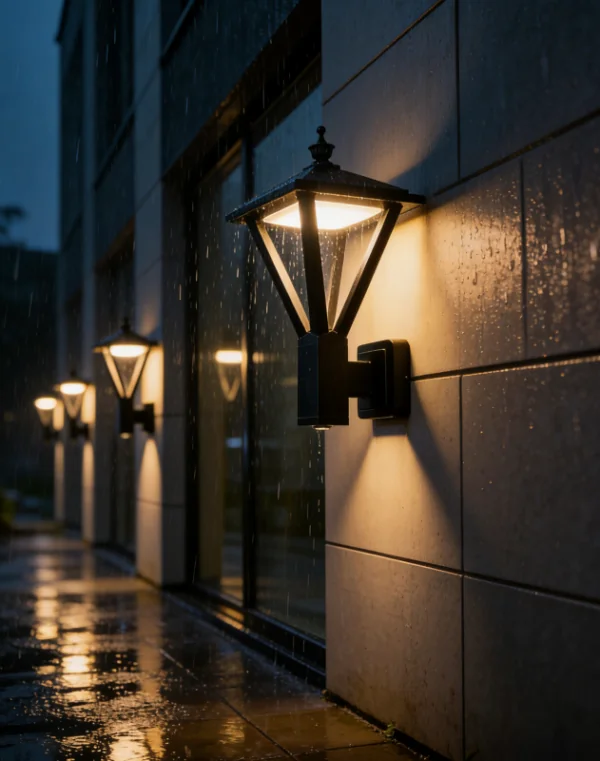
Outdoor wall lighting has both a practical and visual role. It helps define entrances, pathways, façades, balconies, and garden walls after dark. Geometry changes how a fixture fits the architecture, how light is perceived, and how the product looks during the day. For buyers comparing an LED outdoor wall sconce, rectangle and round forms should not be treated as simple style choices. Each shape works better with certain building lines, installation areas, and merchandising needs. Selecting the right led outdoor wall sconce therefore requires buyers to consider both architectural compatibility and the intended lighting effect.
Geometry Changes the Visual Relationship With the Wall
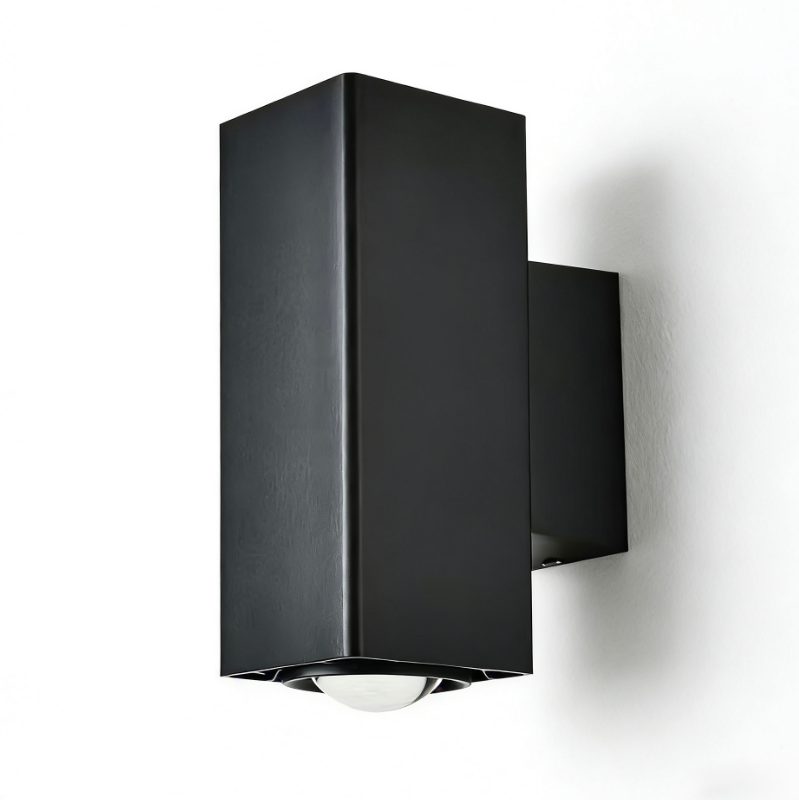
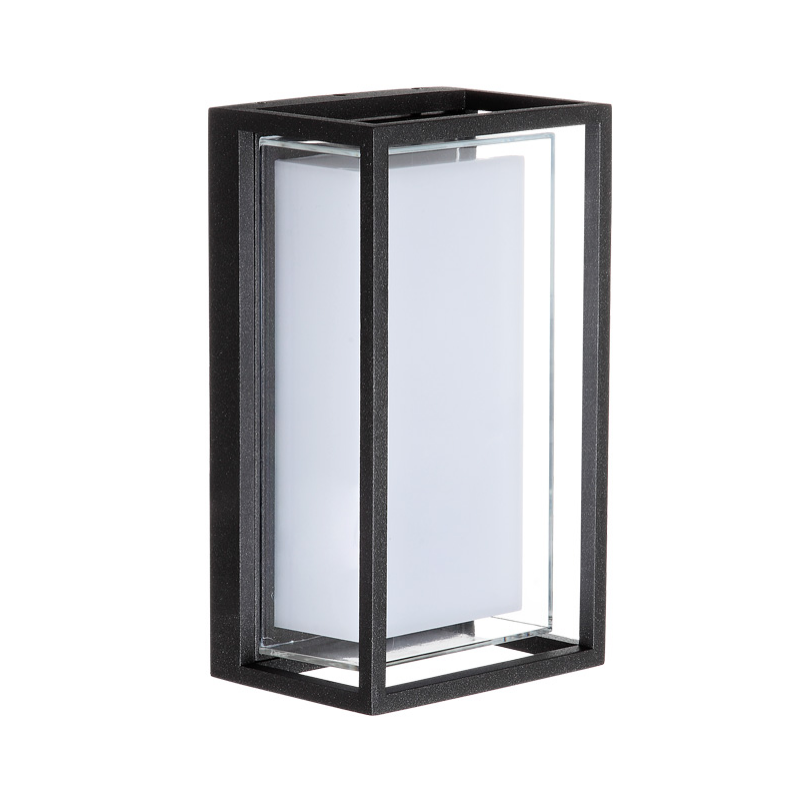
Rectangular fixtures naturally follow straight architectural lines. They work well beside doors, columns, windows, and narrow wall sections where vertical or horizontal alignment matters. Their edges can echo modern façades, metal frames, stone joints, or other structured details. This makes the shape useful for projects that need a clean and organized visual rhythm.
Round fixtures create a softer impression. Curved edges can reduce the rigid feeling of square walls and straight construction lines. They are often suitable for spaces where the designer wants a gentler transition between the luminaire and the surrounding surface. The shape can also work well on compact walls where a less directional outline is preferred.
Light Distribution Matters More Than Shape Alone
Shape affects appearance, but buyers should also review how the fixture handles light. Housing depth, lampshade material, LED placement, and wall distance can all change the final lighting effect. Two products with similar outer dimensions may produce different visual results because the optical structure is different.
When evaluating an LED outdoor wall light, it is useful to look at the relationship between the housing and the light-emitting surface. Rectangular housings may support more directional visual patterns, while round housings may create a softer visual boundary. This is not a fixed rule, so product drawings and actual lighting tests remain important during project selection.
Wall material also matters. Different surfaces reflect light differently, so commercial buyers should review samples under realistic conditions.
Rectangle Designs Suit Structured Modern Architecture
Modern commercial buildings often use straight lines, narrow façade sections, and repeated structural modules. Rectangular lighting can fit these conditions naturally. It can also support symmetrical placement around entrances or repeated installation along corridors and exterior walls.
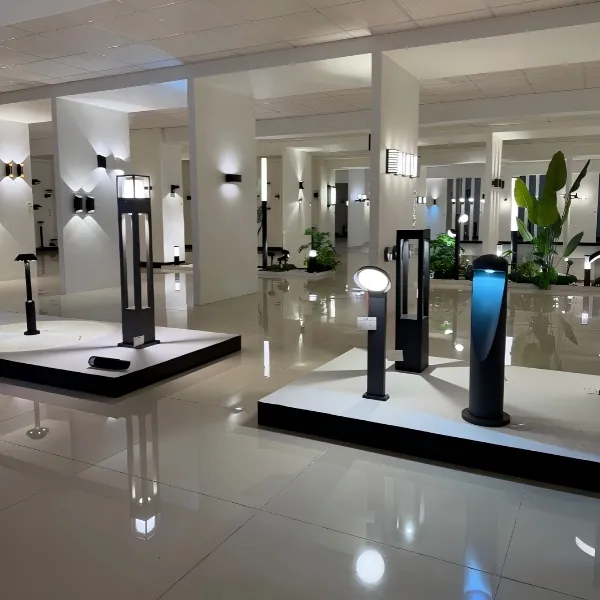
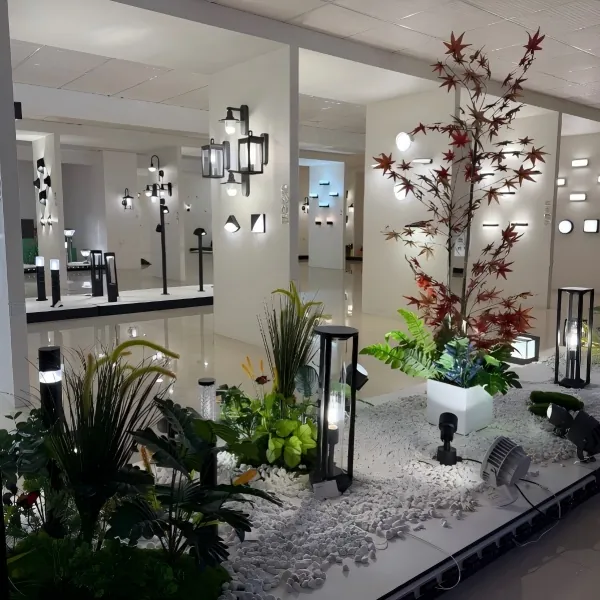
At Keyida, we focus on modern small outdoor lighting and develop many private-mold designs for B2B customers. Our product range is designed for lighting stores, building-material retailers, and project buyers that need clear style differentiation. We also support OEM and ODM development when customers require changes in appearance, color, light source structure, or function.
For buyers building a retail range, rectangle models are useful when the target market prefers minimal styling. Black and gray remain common project colors, while custom colors can support specific collections. Product selection should still consider local architecture, wall scale, and installation height rather than relying on shape alone.
Round Designs Add Softer Visual Balance
Round wall lights can work well in residential-style developments, hospitality areas, garden walls, and mixed-material façades. Their curved profile can visually soften hard surfaces and create a more relaxed exterior atmosphere. This makes them useful when the architecture already contains arches, circular details, or softer landscape elements.
From a retail perspective, round products can also broaden a collection that is dominated by rectangular fixtures. Offering both shapes gives distributors more flexibility when serving different architectural preferences. For an LED outdoor wall sconce, this variety can be valuable when the same buyer manages several projects with different visual requirements.
Round geometry does not automatically mean decorative styling. Compact round fixtures can still look modern and restrained. The key is to review proportion, surface finish, light direction, and the way the product sits against the wall.
Product Structure Should Support the Design Choice
Geometry should never be considered separately from materials and electrical structure. Outdoor fixtures need stable housings, suitable lampshades, reliable drivers, and practical maintenance. These points are especially important for distributors and project buyers that manage after-sales service.
Our LED Outdoor Wall Sconce – G0936 uses a die-casting aluminum housing with a PC lampshade. It is rated IP65 and uses an Epistar SMD 12W LED chip with a KEDA Driver. The input range is 85–265V AC at 50/60Hz, and the fixture size is L240 × W139 × H98 mm. The product includes a 3-year warranty.
The polished die-cast aluminum body supports outdoor durability, while the stable chip and driver are selected for long-term operation. For buyers comparing a rectangular LED outdoor wall light, this type of specification provides a clearer basis for evaluating size, electrical compatibility, protection level, and maintenance planning.
Selection Should Start With the Project, Not the Shape
Choosing between rectangle and round lighting is easier when buyers begin with the wall, building style, installation height, and desired visual effect. Rectangle designs usually fit structured modern architecture more naturally, while round designs can introduce softer balance. Neither geometry is suitable for every project.
Keyida supports B2B customers with regular product updates, private-mold development, OEM and ODM services, and technical materials such as 2D drawings, high-resolution images, and manuals. For distributors and project buyers, the final choice should combine geometry with product structure, lighting effect, maintenance needs, and market positioning. That approach makes the shape decision practical rather than purely decorative.