Outdoor lighting does more than provide visibility. It can shape how trees, walls, sculptures, and paths appear after dark. By adjusting the angle and distance of a LED landscape spotlight, designers can create silhouettes, layered shadows, or subtle textures. For lighting retailers and project buyers, these techniques can add visual interest without making the lighting layout unnecessarily complex.
Shadow effects depend on three basic factors: the position of the fixture, the distance between the object and the illuminated surface, and the shape of the object itself. Understanding these relationships helps project teams test lighting arrangements before installation.
- Use tree branches as moving patterns.
Place the light below or slightly beside a tree so branches cast shadows onto a wall or fence. Wind changes the shapes naturally, which can make courtyards and garden walls feel more dynamic.
- Backlight broad-leaf plants.
Position the fixture behind a plant and aim it toward a nearby wall. The leaves form silhouettes while the wall becomes the illuminated background. This method works well near entrances, patios, and landscaped borders.
For planting areas, garden spike lights can provide useful positioning flexibility. Installers can test several locations in the soil before choosing the final beam angle and shadow size.
- Light textured walls from the side.
Brick, stone, and rough concrete develop stronger visual texture when the beam reaches them at an angle. Raised areas catch the light while recessed sections remain darker.
- Extend the shape of columns and architectural edges.
A low or diagonal beam can cast a longer shadow beside a column, screen, or façade detail. The effect can make structural features more visible without placing a fixture directly on them.
At Keyida, we focus on modern compact outdoor lighting. This type of fixture can fit into smaller landscape areas where project designers want illumination without making the luminaire itself the main visual feature.
- Create shadows from sculptures.
Garden sculptures, stones, and metal objects can cast distinctive forms onto walls or paving. Moving the fixture sideways rather than placing it directly in front of the object can stretch the shadow and change its direction.
- Layer several objects in one beam.
Plants of different heights can produce overlapping shadows. Taller plants create larger forms, while lower shrubs add smaller shapes closer to the ground. This technique can give narrow planting strips more depth.
An LED landscape spotlight can support this design when its beam is positioned carefully. Project teams should test the fixture after dark because daytime placement alone does not show the final relationship between light, object, and surface.
- Cast soft shadows across walkways.
Instead of aiming light directly along a path, angle it across low plants or edging. The resulting shadows can reveal paving texture and define planting zones while keeping the visual effect restrained.
- Use shadowing in narrow courtyards.
Small side passages often have limited room for decorative fixtures. A compact light placed near a plant, screen, or textured wall can create depth without requiring several lighting points.
For these applications, garden spike lights can be useful where soil installation is available. Designers should still check pedestrian routes, viewing direction, and glare before fixing the position.
- Match the fixture to the installation environment.
Creative lighting still depends on suitable construction. Housing material, lampshade design, voltage range, protection level, and driver performance should be reviewed together with the visual effect.
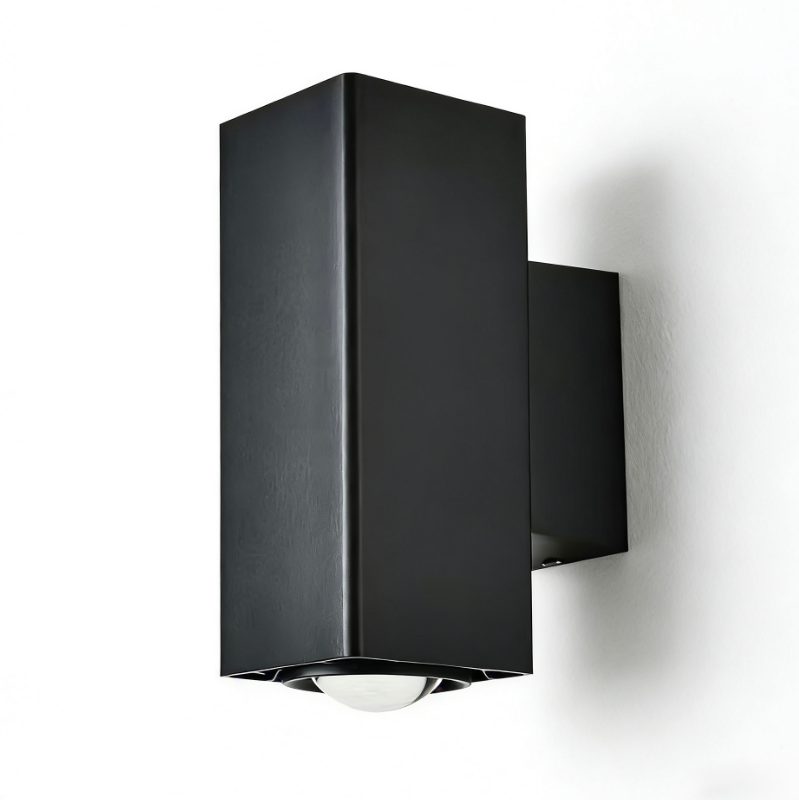
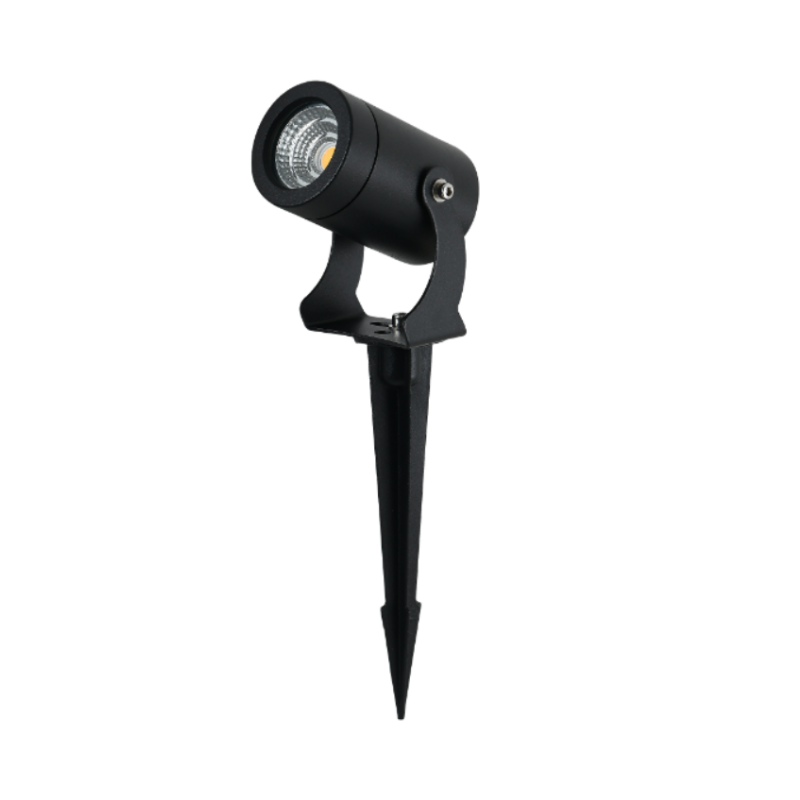
Our E0338 outdoor light has a die-casting aluminum housing and glass lampshade. It uses an Epistar COB 5W LED chip and KEDA Driver, with an input of 85–265V AC, 50/60Hz. The fixture measures Ø50 × L78 × H260 mm, carries an IP54 rating, and has a three-year warranty.
Its compact form can suit focused landscape applications where designers need a small fixture for directional lighting. Product selection should still be based on the actual installation environment, electrical requirements, and project maintenance plan.
- Adjust distance to control shadow size.
Moving the light closer to an object generally makes the projected shadow larger, while changing the distance to the receiving surface alters its sharpness and scale. Small adjustments can create noticeably different results.
Testing is especially useful with irregular plants, decorative screens, and textured materials. Installers can mark several possible positions, compare the effects after dark, and then finalize the mounting point.
For B2B projects, Keyida also supports OEM and ODM cooperation. Different markets may require changes in appearance, color, lighting functions, or other project details, so early technical communication can help clarify the intended application.
Making Shadowing Part of the Design
Shadowing works when light, objects, and surfaces are planned together. Branches can animate a wall, textured materials can gain more depth, and sculptures can create a second visual form through their shadows.
The practical value is not simply a more decorative night scene. Careful positioning can help project teams use fixtures purposefully and avoid adding lighting points without a clear function. For retailers, designers, and project buyers, understanding these ten approaches also makes it easier to discuss installation ideas with customers and build landscape lighting schemes around real spaces. Suppliers such as Keyida can support these discussions with outdoor lighting options suited to different landscape applications.