Designing illumination for sprawling commercial estates, luxury resorts, and expansive university campuses requires meticulous electrical planning. Lighting designers and electrical contractors face a critical decision during the initial blueprint phase. They must choose between Alternating Current (AC) and Direct Current (DC) power systems for their pathway illumination. Selecting the wrong electrical architecture can lead to severe voltage drop, inconsistent brightness, and inflated installation costs. As a premier global manufacturer with twenty-five years of dedicated industry experience, we at Keyida engineer high-performance landscape fixtures tailored to complex commercial environments.
Operating from our state-of-the-art 7,000m² production facility, we supply robust, certified hardware to B2B clients worldwide. In this technical comparison, we will thoroughly examine the mechanical differences between AC and DC systems. We will help developers, sourcing managers, and architects determine which power configuration provides the highest reliability and return on investment for massive outdoor projects. We focus entirely on long-term performance and installation efficiency.
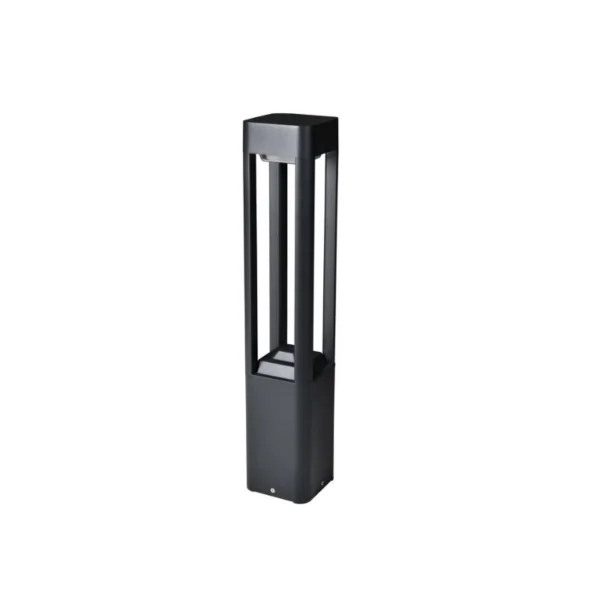
Understanding AC Line Voltage for LED Bollard Lights
Alternating Current, commonly referred to as line voltage, operates directly from the main municipal power grid. In commercial applications, these systems typically run at 120V, 240V, or 277V. The absolute greatest advantage of an AC power system is its sheer capacity to transmit electrical current over immense distances. High voltage pushes electricity through the copper wires with tremendous force. Because of this powerful force, contractors do not have to worry about voltage drop at the far end of a long pathway. A fixture located five hundred meters away will shine just as brightly as the very first fixture on the circuit.
Furthermore, AC systems do not require bulky external transformers to step down the power, which streamlines the layout. However, AC installations require strict adherence to local building codes. Because line voltage is potentially lethal, contractors must bury electrical conduits deeply underground, often below the local frost line. This deep trenching requires heavy excavation machinery, which significantly increases upfront labor costs and site disruption for property developers.
The Mechanics and Safety of DC Low Voltage Systems
Direct Current, or low voltage power, is a highly popular alternative for modern landscape architecture. These systems utilize step-down transformers to convert the high-voltage municipal AC power into safer 12V or 24V DC power. The primary benefit of DC power is its unmatched safety profile. Because the operating voltage is so low, the risk of severe electrical shock is practically eliminated. This makes low voltage systems exceptionally ideal for high-traffic public parks, luxury residential estates, and areas near water features.
From an installation standpoint, DC systems are vastly superior in terms of labor efficiency. Commercial building codes typically allow low voltage cables to be buried in shallow trenches without thick protective conduits. This drastically reduces the excavation time required for landscape contractors. For sprawling corporate gardens, installing safe and efficient bollard lights using a DC architecture minimizes disruption to existing hardscapes and mature tree roots. However, the major drawback of DC power remains voltage drop. As the electrical current travels further away from the central transformer, the voltage naturally dissipates due to wire resistance. If a pathway is too long, the fixtures at the end of the line will appear noticeably dimmer than those near the power source.
Mitigating Voltage Drop in Large-Scale Estate Projects
For expansive commercial estates, mitigating voltage drop in a DC system requires careful mathematical calculation and strategic wiring techniques. Electrical contractors cannot simply run a single continuous daisy-chain wire for hundreds of meters. Instead, they must employ center-tap or hub-and-spoke wiring methods. By placing the transformer in the center of the specific lighting zone and running equal-length cable lines out to the fixtures, installers ensure that the electrical load is balanced evenly.
Additionally, utilizing thicker, lower-gauge copper wire significantly reduces electrical resistance over incredibly long runs. If an estate is simply too massive for low voltage wiring to be practical, project managers must pivot to a standard 120V or 277V AC system to guarantee consistent illumination. Whichever electrical architecture your structural blueprint demands, the physical quality of the luminaire remains paramount. The internal driver must be robust enough to handle minor power fluctuations without visible flickering. The fixture body must also withstand severe weather conditions. We construct our heavy-duty housings from premium aluminum, ensuring they survive decades of intense outdoor exposure, protecting your investment.
Keyida’s OEM Capabilities and B2B Manufacturing Excellence
Delivering flawless illumination across a vast commercial property requires dependable, highly certified hardware. At our manufacturing facility, we address harsh physical challenges through advanced material engineering. We apply a rigorous pre-painting sanding process to all our metal surfaces before finishing. This critical scuff-sanding creates microscopic grooves in the bare aluminum. It ensures that our specialized anti-corrosion primer and protective powder coating bond flawlessly. This multi-layer defense completely prevents moisture ingress, salt-spray damage, and peeling over decades of continuous commercial use. We prioritize long-term maintenance efficiency for property managers.
Therefore, we design our modern commercial fixtures with independent, easily replaceable LED modules and internal power drivers. If an electronic component eventually reaches the end of its lifespan, maintenance crews can replace the internal parts in mere minutes without uninstalling the heavy metal housing from its concrete base.
We continually develop proprietary molds quarterly, giving our wholesale distributors a distinct competitive advantage. Every premium fixture we manufacture holds CE, RoHS, and SAA certifications, ensuring rapid customs clearance and immediate building code compliance. Sourcing managers and global landscape architects can partner with our expert engineering team to equip your next major estate project with highly reliable LED bollard lights engineered for maximum commercial longevity.