Modern outdoor lighting has become a key part of residential, commercial, and landscape projects. When we design lighting systems at Keyida, we often receive a common question from clients: how long can outdoor LED lights realistically last under long-term use in outdoor environments, especially when weather, installation quality, and maintenance conditions vary across regions.
Outdoor LED Lighting Solutions and Service Life Expectations in Real Projects
When we develop outdoor LED lighting solutions, we typically design for a multi-year operational cycle rather than short-term performance. In real applications, LED light sources often operate for tens of thousands of hours depending on driving current, thermal control, and installation environment. For B2B buyers, service life is not only about the LED chip itself, but also system stability across the full fixture structure.
From our experience, stable electrical design and heat dissipation are the main factors that influence long-term durability. Even under continuous use, well-structured systems can maintain consistent brightness levels when thermal load is properly managed.
Material Structure and Aluminum Outdoor Lighting Fixtures Performance
The durability of aluminum outdoor lighting fixtures is strongly influenced by housing material selection and surface treatment. Aluminum bodies provide better thermal conductivity compared to plastic structures, helping reduce internal heat accumulation during operation. This directly supports longer LED lifespan in outdoor environments.
At Keyida, we use aluminum combined with PC or acrylic covers to maintain structural stability. This combination helps support the fixture remains resistant to deformation and environmental stress over time, especially in humid or high-temperature regions.
Thermal Management and Electrical Stability Factors
Heat is one of the most important factors affecting LED lifespan. Even high-quality LED chips can experience lumen depreciation if thermal design is insufficient. In our engineering process, we focus on balancing chip output and driver efficiency to avoid unnecessary stress on components.
Stable constant-current drivers also help reduce flickering and voltage fluctuation. These elements together extend operational consistency, especially in commercial lighting systems that run for long hours each day.
Manufacturing Approach at Keyida for Outdoor Lighting Systems
At Keyida, we integrate design, production, and testing under one workflow to help maintain consistency across batches. Our production base includes a 7000㎡ workshop and a 1100㎡ showroom, allowing us to maintain both scale manufacturing and product verification.
Each lighting structure is tested for assembly stability and surface durability. This helps support stable performance across different installation environments and long-term usage conditions.
Outdoor LED Lighting Solutions in Commercial Applications
In commercial projects, outdoor LED lighting solutions are often selected based on both efficiency and maintenance cycles. Many clients prefer systems that reduce replacement frequency while maintaining stable illumination for building facades, pathways, or public areas.
We usually recommend modular designs because they allow easier component replacement. This approach helps reduce long-term operational costs without requiring full fixture replacement.
Surface Treatment and Durability of Aluminum Outdoor Lighting Fixtures
The finishing process of aluminum outdoor lighting fixtures plays an important role in outdoor durability. Before painting, each surface is carefully polished to improve coating adhesion. This helps the fixture maintain appearance quality even after prolonged exposure to sunlight and rain.
Our powder coating process is designed to improve resistance to fading and corrosion. This is especially important for installations in coastal or high-humidity environments where oxidation risk is higher.
LED Chip Stability and Driver Lifespan Considerations
LED lifespan is not only determined by the chip itself but also by the driver system. A stable driver reduces electrical stress and ensures consistent current delivery. This directly impacts how long the system can maintain usable brightness levels.
In many outdoor applications, drivers are often the first component requiring replacement rather than the LED chips, which highlights the importance of electrical design in overall system longevity.
Aluminum Outdoor Lighting Fixtures in Custom Engineering Projects
In custom engineering cases, aluminum outdoor lighting fixtures are often selected for their adaptability in different design environments. They support various shapes, finishes, and optical configurations, making them suitable for architectural lighting projects.
Keyida also provides OEM and ODM services, allowing clients to customize color temperature, lighting modes, and sensor integration such as PIR or radar-based controls.
Product Application Example from Keyida B0615 Series
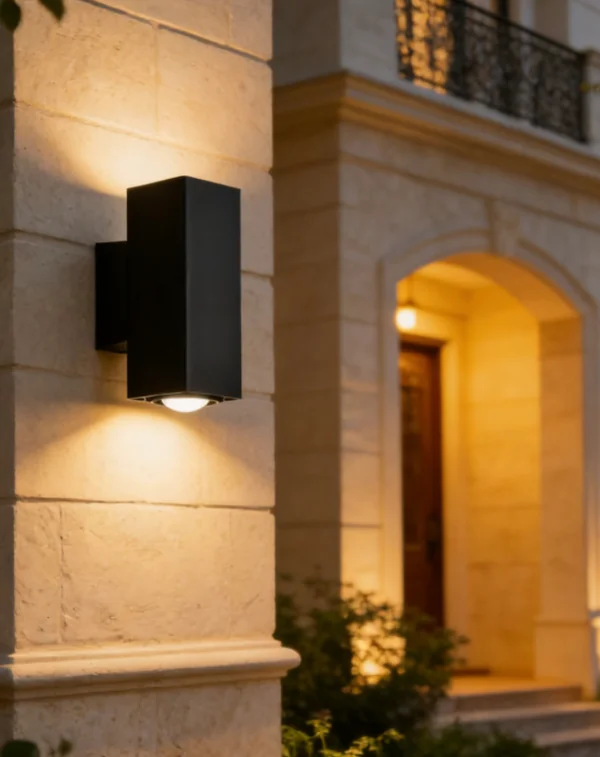
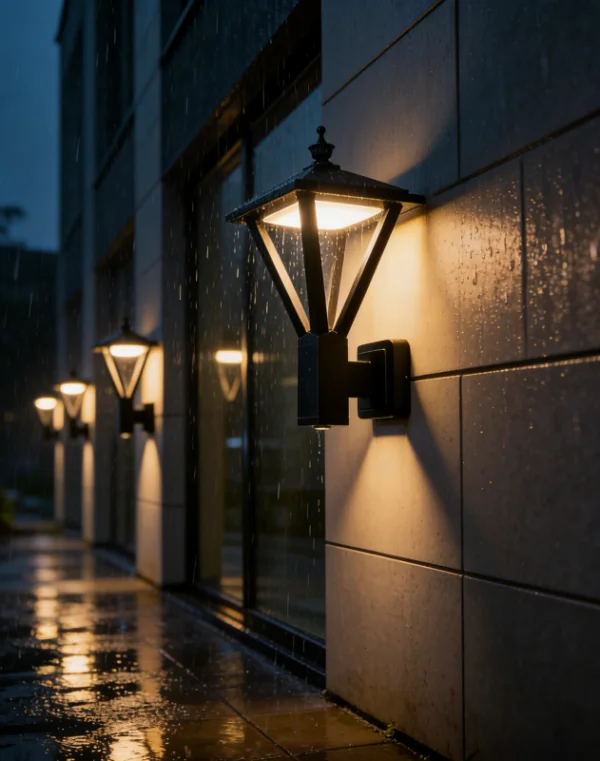
A practical example from our portfolio is the B0615 outdoor wall lamp series. It is designed for modern exterior wall installations and uses an aluminum housing combined with a durable diffuser cover. The structure is optimized for long-term outdoor operation and maintenance convenience.
This model reflects our design direction of combining visual simplicity with functional stability, supporting both residential and commercial use cases.
Maintenance Cycles And Real-World Lifespan Performance
In real-world conditions, outdoor LED systems typically last several years depending on usage intensity and environmental exposure. Regular cleaning of the lens surface and periodic inspection of electrical connections can help maintain performance stability.
We often advise clients to consider maintenance intervals during project planning, especially for large-scale installations where accessibility may be limited.
Outdoor LED Lighting Solutions for Long-Term Planning
When planning outdoor LED lighting solutions, it is important to consider not only initial brightness but also long-term degradation behavior. Lumen maintenance gradually decreases over time, but well-designed systems can maintain usable output for extended periods.
This is why we focus on both optical efficiency and structural durability in our product development process.
System Integration and Smart Function Options
Modern outdoor lighting systems increasingly integrate smart functions such as CCT adjustment, RGB lighting modes, and motion sensing. These features help improve energy efficiency and user flexibility in different application scenarios.
By integrating sensors and control modules, lighting systems can reduce unnecessary energy consumption while extending operational lifespan through adaptive usage patterns.
Conclusion
The lifespan of outdoor LED lighting depends on a combination of thermal design, material quality, electrical stability, and maintenance strategy. While LED technology itself is inherently long-lasting, system-level engineering determines real-world performance.
At Keyida, our focus is on delivering stable lighting systems that align with commercial requirements and environmental conditions. By combining design, manufacturing control, and material selection, we aim to support reliable long-term outdoor lighting applications for global B2B clients.